Why gas stoves should be consigned to the dustbin of history
The fight over gas is not about the appeal of cooking over an open flame. It's about power and the historic role of women and cooking.

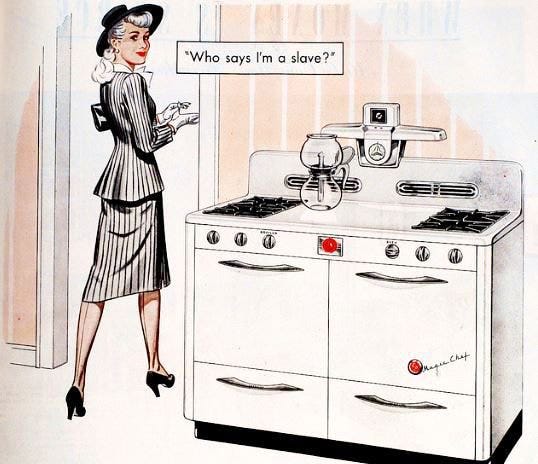
In a recent post, Something About The Glow, urbanist writer Addison Del Mastro discussed the appeal of incandescent bulbs, gas stoves, and even CRT screens, which I didn’t know were still a thing. I was most interested in the stove. Del Mastro writes:
“Sometimes, with regard to gas stoves, you’ll hear about the primal instinct to grill meat over an open flame, which often reduces to ‘We really want to keep selling gas stoves and natural gas lines.’ But the fact that industry might co-opt the appeal of the open flame doesn’t, in and of itself, mean that there isn’t something deeply appealing to us about cooking over a flame.”
There are a number of issues raised here, but the one I want to concentrate on is the appeal of cooking over an open flame. The question is, appeal to whom? I have been studying the history of kitchen design for my next book, and this issue comes up time and time again. Let’s go back a few hundred years to a much bigger transition- the move from open hearth cooking to the enclosed stove, and see who loves the open flame.
Author Linda Peterat wrote about the cook stove revolution of the 1800s when the stove began to replace the open fire:
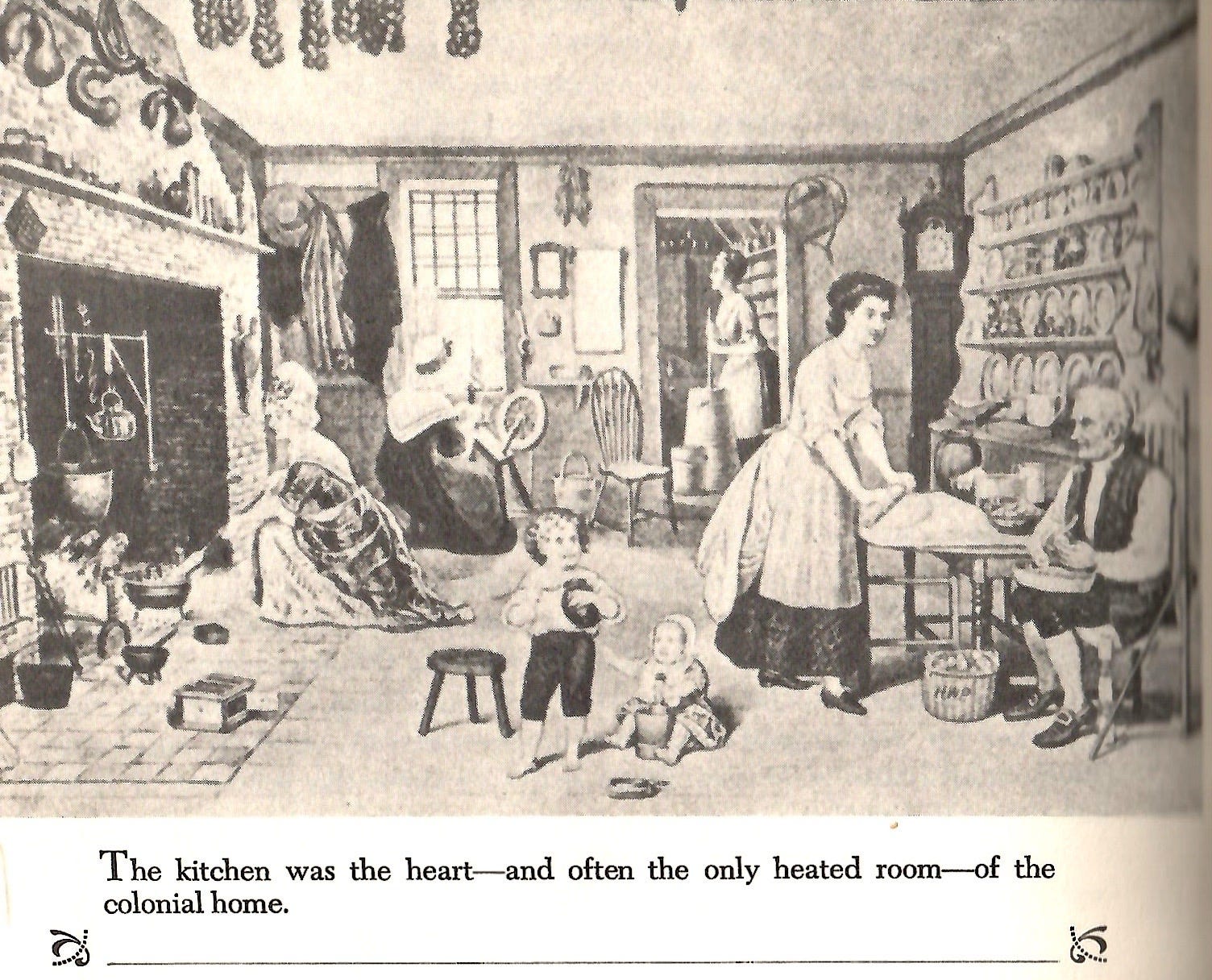
“In the early 1800s many patents were granted for cook stoves, beginning the rush to develop an efficient and functional cook stove that could gain wide acceptance. But there were numerous obstacles. There was considerable angst beginning in the mid 1800s about the impact of the stove on home life. Some people believed that the disagreeable odours, bad air and smoke from stoves were harmful to health, causing headaches, giddiness and stupor. Others, mainly men, sentimentalized the open fire of the old fireplaces, believing that adopting a cook stove would ruin domestic life and social intercourse that occurred in the glow of an open fire. Others believed the energy emanating from an open fire nurtured the human spirit.”
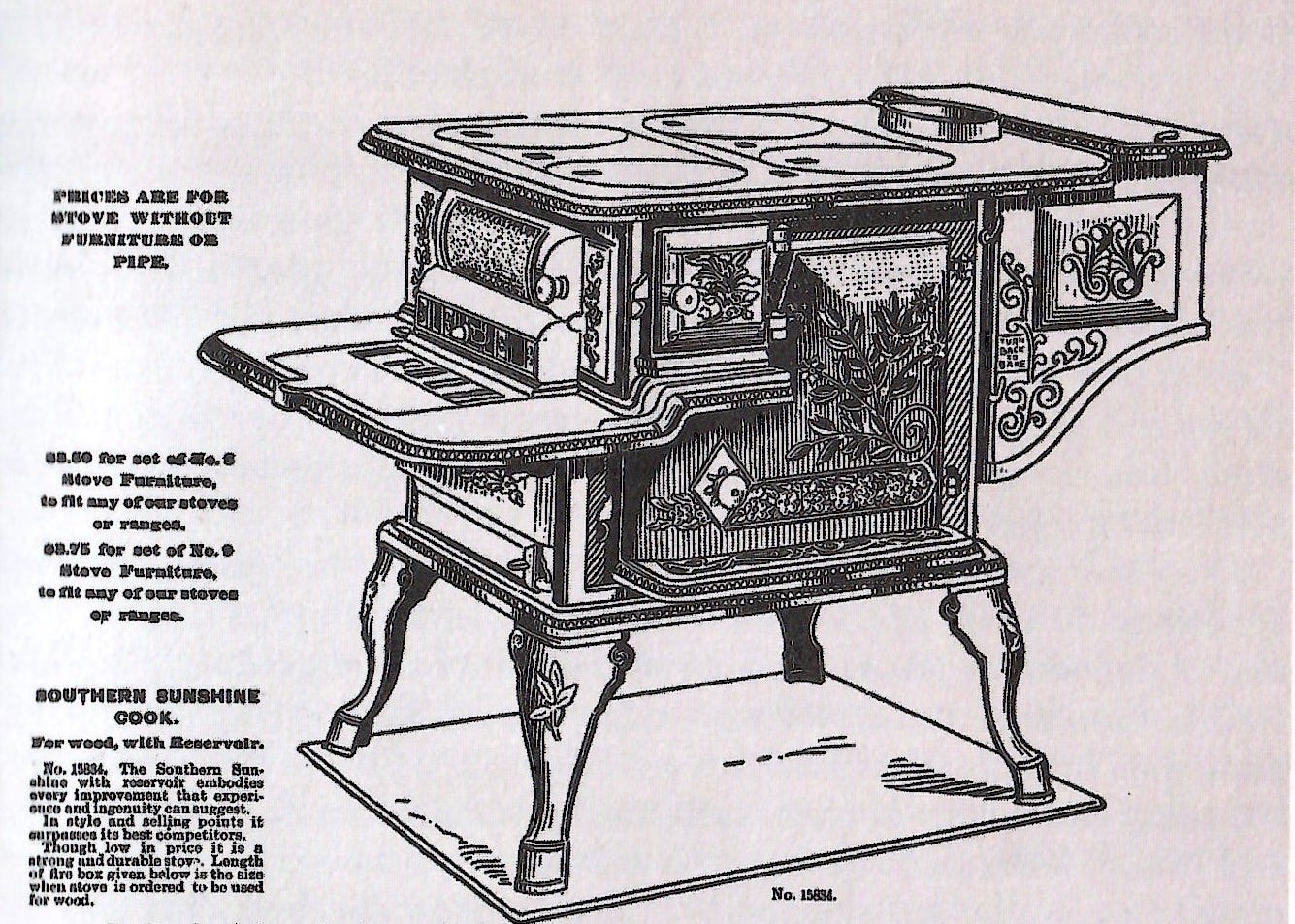
Ruth Schwartz Cowan, in her book “More Work For Mother: The Ironies Of Household Technology From The Open Hearth To The Microwave” notes that “The enclosed stove, whether for cooking or for heating, was not greeted with complete enthusiasm, at least by some segments of the population, when it first came on the market. The hearth, with its blazing fire, had long been a potent symbol of home to people of English descent.” She quotes an early historian:
“The old-fashioned fireplace will never cease to be loved for the beautiful atmosphere it imparts to a room, and the snug and cheerful effect of an open wood-fire. When stoves were first introduced, a feeling of unutterable repugnance was felt by all classes toward adopting them, and they were used for a generation chiefly in school houses, courtrooms, bar-rooms, shops and other public and rough places. For the home, nothing except the fireplace would do. The open fire was the true centre of home-life, and it seemed perfectly impossible to everybody to bring up a family around a stove.”
Women, who did most of the cooking at the time, leaped at the opportunity to use stoves. Susan Strasser writes in Never Done: A History of American Housework:
“The job of cooking on those fires was hot and dangerous. Despite long-handled utensils, cooks had to bend and kneel and reach into the flames. Burning cinders flew from unscreened kitchen fires, skin and clothing scorched at the grate, and small children were seldom safe in their own homes. In the summer, the heat from the fireplace could be nearly intolerable.”
Cowan claims that the switch to stoves didn’t mean a lot less work for women. The cast-iron cookware was still heavy, and the technological change from hearth to stove also changed what we ate.
The stove, in short, augured the death of one-pot cooking or, rather, of one-dish meals — and, in so doing, probably increased the amount of time that women spent in preparing foodstuffs for cooking. The diet of average Americans may well have become more varied during the nineteenth century, but in the process, women’s activities became less varied as their cooking chores became more complex.”
The men finally came around when they caught on to the real benefit of the stoves: their fuel efficiency. Cowan writes:
“The impact of those stoves on the houses in which they were installed is not difficult to discern: stoves were labor-saving devices, but the labor that they saved was male. The important activity that was radically altered by the presence of a stove was fuel gathering; if a stove halved the amount of fuel that a household required, it thus halved the amount of work that men had to do in cutting, hauling, and splitting wood.”

So who is waxing eloquent about the “appeal of cooking over an open flame” today? Certainly not the women who do most of the cooking. Spouse Kelly, who used to write about food and does the cooking in our house, switched to induction and found that “The biggest surprise for her was how much more comfortable it was to cook without that open flame and the heat; it’s just easier and safer.” It’s also faster, the pots and pans don't get covered in gook, and the cool stove cleans up in seconds.

As I wrote a few years ago, during a discussion about controls on gas stoves,
“There is no question that many people who cook with gas love it—this includes women—and if they have not tried induction stoves, they are probably loath to give it up. But that's not what's happening here; this is not a debate about health or cooking preferences. Instead, it is men like Rep. Jim Jordan who decided that gas stoves are up there with gods and guns…It's being driven by rich white men who have probably never cooked a meal that wasn't on a barbecue and get their campaign funds from fossil fuel companies.”

When you read about the women who invented the kitchen as we know it, a line running from Catherine Beecher to Christine Frederick to Lillian Gilbreth to Grete Lihotzky, you learn that their main ambition was to make it easier to cook and to clean up a kitchen so that women could do other things with their lives. Less time in the kitchen meant more freedom.
This is why gas stoves should be consigned to the dustbin of history. The transition from gas to induction is certainly not as significant as the switch from open hearth to enclosed stove, but the issues are much the same: Induction is faster, cleaner, and healthier for the women who still do the vast majority of the cooking. The men who run the country and the gas companies and have a romantic attachment to an open flame can go outside and fire up the barbecue.
This a worthwhile essay. Almost forty years ago I worked briefly in a high-end restaurant kitchen. It is where I really learned to cook. I've subsequently done three kitchen renovations in my homes. In the first two homes I put in Garland 6-burner commercial ranges with Garland commercial exhausts. I could deep fry to my heart's content. In my last reno, I put in a BOSCH induction range and a high-end residential exhaust (to the outside as should always be the case). The induction range is faster than the gas ranges and temperature control is more precise. Most importantly, because I am not heating enormous volumes of hot air as was the case with my gas ranges, the smaller externally-vented exhaust still works perfectly. In general, consumers are ill- informed and the appliance industry helps them remain that way. The most overlooked appliance in every kitchen renovation is the exhaust. People dream about their ranges and the exhaust is an afterthought. Induction ranges ameliorate the impact of such misguided prioritization. They produce no hot air (which can be 20X the volume of room temperature air) and they produce no CO2, CO, or NO2 all of which are to some extent toxic. The truth is houses/apartments should be fully electrified. Burning gas to do anything in a home is inefficient and potentially harmful. But our governments are short-sighted and chickenshit, and corporations fight such change. Remember how long it took governments to (kind of) address the harms caused by smoking.
"Others, mainly men, sentimentalized the open fire of the old fireplaces, believing that adopting a cook stove would ruin domestic life and social intercourse that occurred in the glow of an open fire."
Isn't it just like men to sentimentalize the existence of an earlier stress- and care-free period of time that never actually existed?