
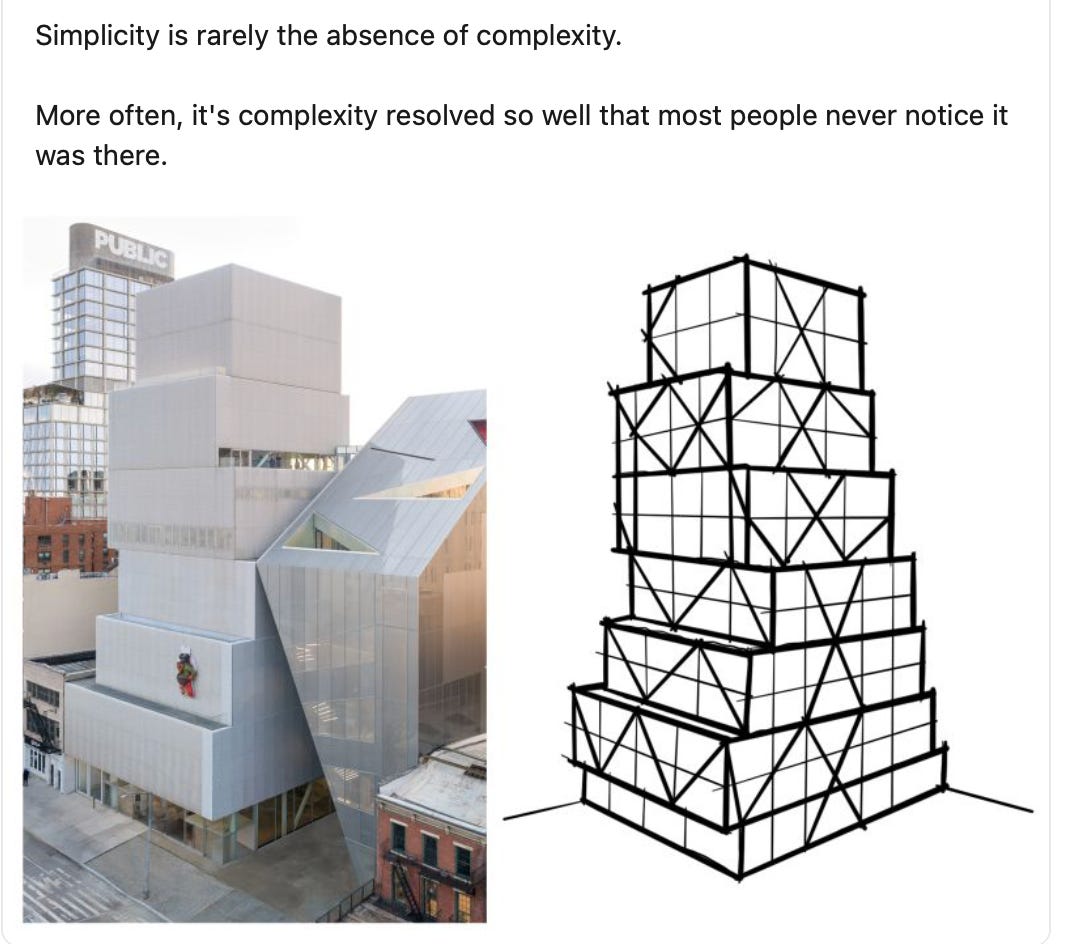
I was recently bemused by a LinkedIn Post written by architect and development strategist Sam Mcheileh, looking at SANAA’s New Museum of Contemporary Art in New York City. He writes: “it looks straightforward: a stack of offset boxes. But shifting those volumes complicates everything - from the floor plans to the smallest details. It complicates the structure too.” He concludes:
“Simplicity is rarely the absence of complexity. More often, it’s complexity resolved so well that most people never notice it was there.”

I have been writing about simplicity for many years, and I am sorry; this ain’t it. I think Antoine de Saint-Exupéry said it better:
"Perfection is achieved, not when there is nothing more to add, but when there is nothing left to take away."
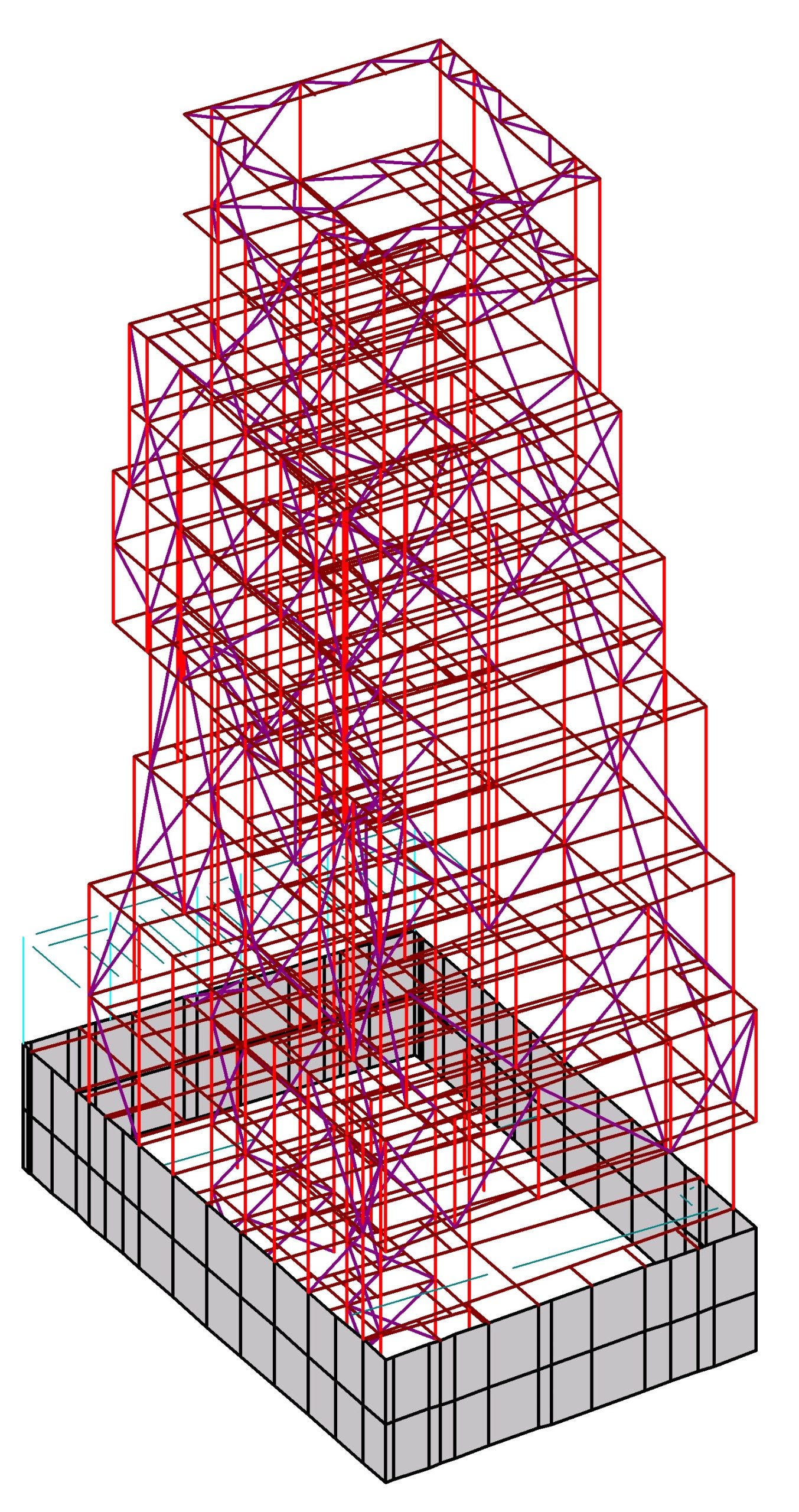
The New Museum is a lovely building, but as this drawing of its structure from SGH Engineers shows, it is anything but simple, with major structural moves to support all those big cantilevers. I commented on LinkedIn, and it started a wonderful discussion about simplicity, including comments from Nick Grant:
“Anyone who understands how stuff is made, whether a chippie, brickie, steel erector, architectural technologist, engineer or weekend DIY enthusiast will immediately see through the superficial sculptural skin to the underlying ugliness underneath.”
I’m with Nick, but then how we see things, and what we call beautiful, varies according to our own preoccupations and experiences. In the first paragraph of my book, The Story of Upfront Carbon, I wrote, “when you look at the world through the lens of upfront carbon, everything changes.” And when I look at this building, I see a lot of upfront or embodied carbon in all those cantilevers.
On the other hand, we have Professor Mark Mückenheim, complaining about my single-minded preoccupations:
Embodied energy, material choices, and construction methods matter. But sustainability and circularity need to be understood holistically and across longer time spans. Singling out one problematic aspect and declaring a building “unsustainable” reduces a complex question to a single metric. I would take one complex building that people will fight to preserve over a hundred disposable ones any day. The question is not only: “How sustainable was this building to construct?” but: “Will people still value it enough to keep it standing 100 years from now?”
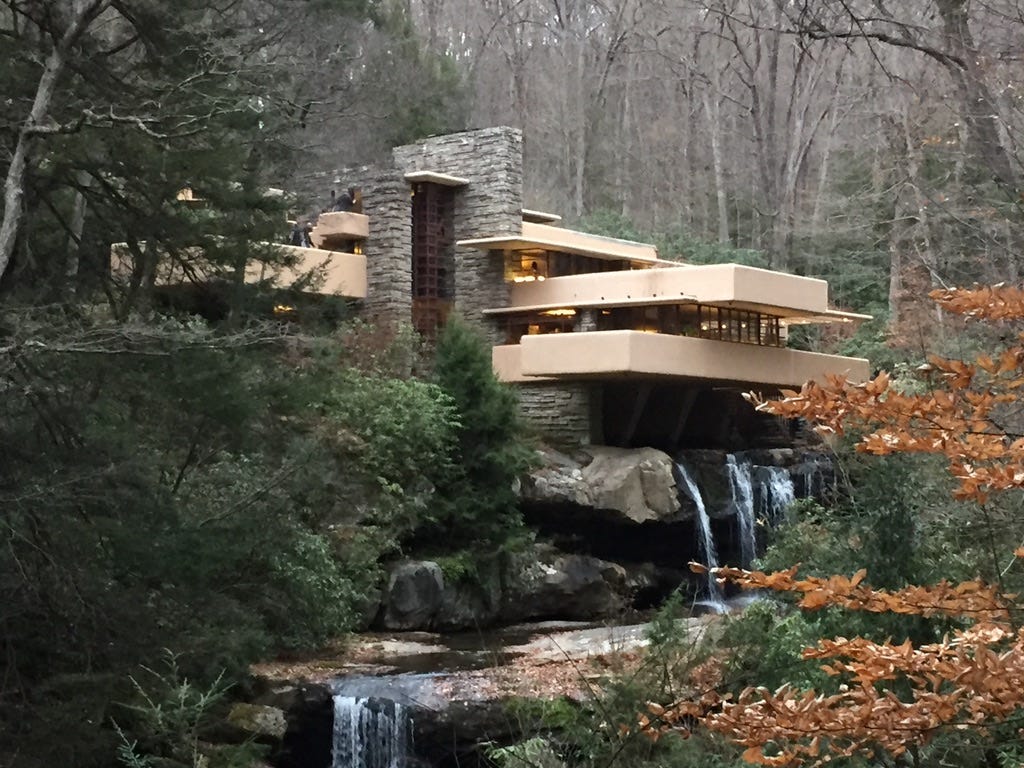
Professor Mückenheim raises an interesting point. The New Museum and a certain almost-100-year-old building that people value enough to keep standing share an expensive feature: cantilevers. I can’t find my copy of Forrest Wilson’s classic What it Feels like to be a building, but hold your arm straight out for a few minutes, and you will get a good idea of what it feels like to be a cantilever- IT HURTS. This is why Fallingwater gets rebuilt at a cost of millions every few decades- it wants to be Fallingbuilding.
Cantilevers use a lot of material, with more reinforcing or structural steel. That’s why the Structural Engineers 2050 Smart Design Guidelines say,
“Avoid excessively long-span floor structures and excessive cantilevers where possible, particularly when subjected to high loading or stringent serviceability demands. Excessive spans and cantilevers will increase the embodied carbon (as well as the cost) of a structural system.”
A 2024 study, Embodied Carbon Premium for Cantilevers, concluded:
Unbalanced cantilevers in buildings can lead to a 10% increase in embodied carbon compared to alternative designs incorporating supporting columns. Such findings underscore the environmental premium for cantilevers, prompting a re-evaluation of design practices towards minimising embodied carbon.
Sam Mcheileh claims simplicity is “complexity resolved so well that most people never notice it was there.” This is just wrong. To quote William of Ockham in 1323, also spelled Occam, famous for his razor: “the simplest explanation is usually the right one.” It’s called the razor because it “shaves away” complications, and it gives Mcheileh a close shave- you can’t call complexity simple just because you can’t see it. And frankly, anyone who knows anything about buildings or ever played with Jenga Blocks sees it instantly.
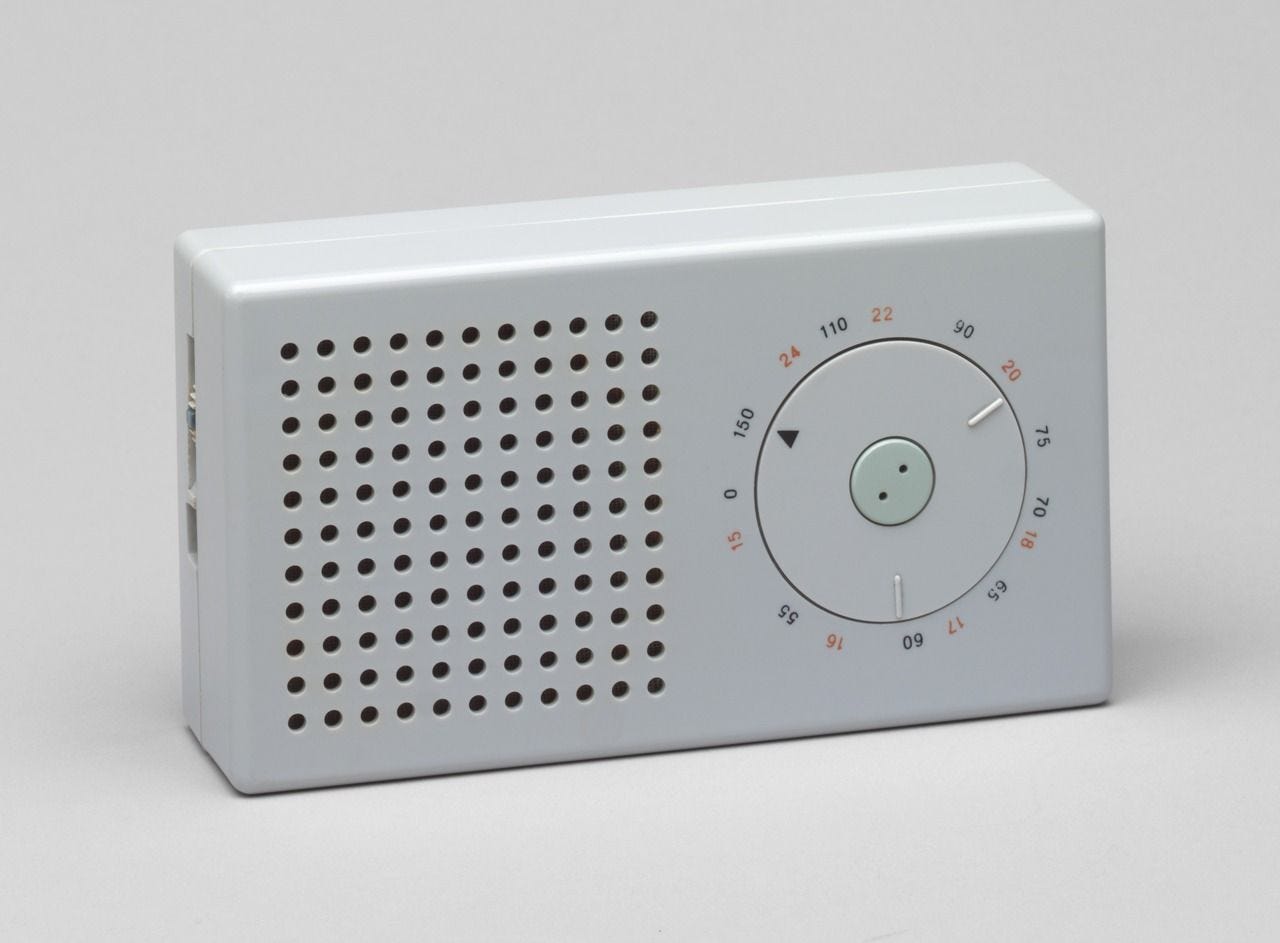
Dieter Rams put it in the last of his ten design principles- you don’t keep adding stuff to make it look simple.
“Good design is as little design as possible. Less, but better—because it concentrates on the essential aspects, and the products are not burdened with non-essentials. Back to purity, back to simplicity.”
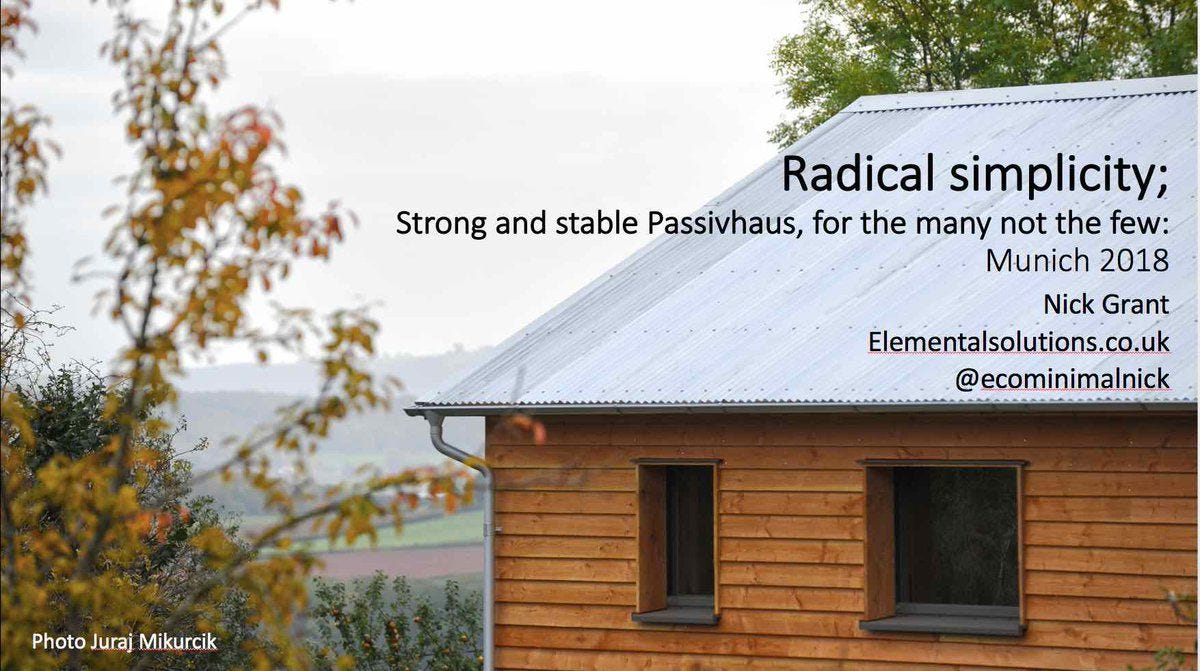
Simplicity, as I learned from Nick Grant, is basically the principle that the simpler a building (or in fact anything) is, the easier and less expensive it is to build and maintain. Radical Simplicity asks, “What do we actually need? What is the least that will do the job? What is enough?”
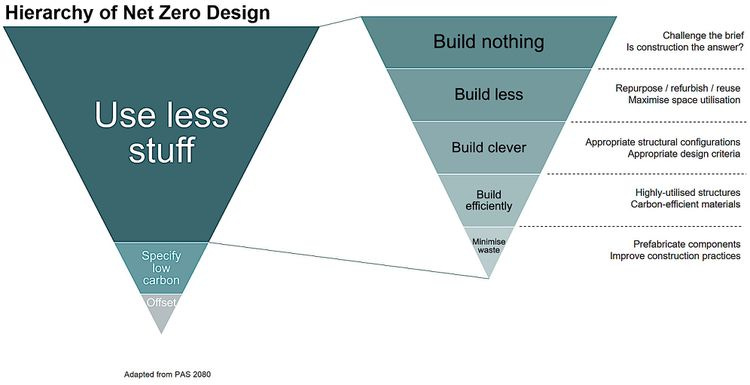
Simplicity, as I learned from Will Arnold, is about using less stuff, which includes building clever and building efficiently.
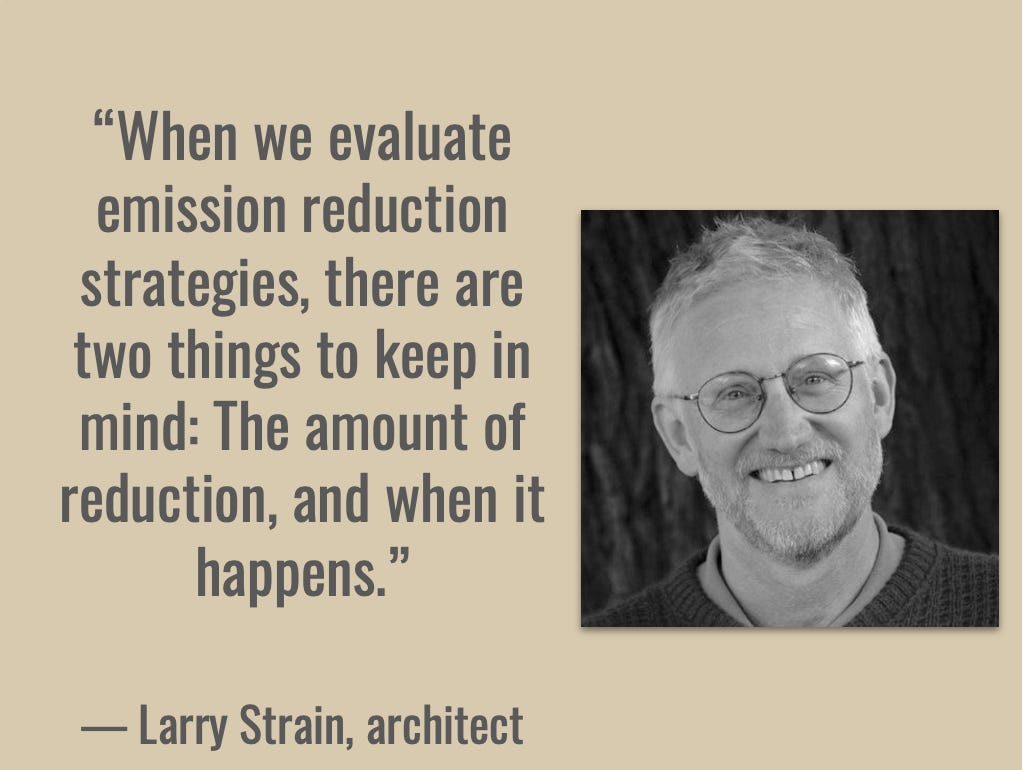
Professor Mückenheim thinks the embodied carbon is worth it if we look at the long-term, hundred-year picture. I disagree; when Frank Lloyd Wright was designing Fallingwater, we didn’t worry about embodied carbon, but now we do, when every kilogram of carbon emissions matters. As Larry Strain tells us, there is the time value of carbon, a concept that “arises from the ruthless maths of climate science.”
"When we evaluate emission reduction strategies, there are two things to keep in mind: the amount of reduction, and when it happens. Because emissions are cumulative and because we have a limited amount of time to reduce them, carbon reductions now have more value than carbon reductions in the future.”
This is why I find Sam Mcheileh’s definition of simplicity so misguided, because it ignores the reason we should be embracing simplicity: it's about using less stuff now when it really matters, reducing Upfront Carbon, and building no more than we need. But then he worked for Zaha Hadid, who would recoil at such a concept.

Simplicity is not complexity resolved or complexity hidden. It is complexity reduced or eliminated. Simplicity is hard; I wrote years ago that “it is often harder for an architect to make a simple design look beautiful; they have to rely on proportion and scale. It takes skill and a good eye.” That’s why Dieter Rams’ designs look so simple, yet so beautiful. In a world where we need to use less of everything, simplicity, not hidden complexity, should drive every design.
Last words to Henry David Thoreau: “Our life is frittered away by detail . . . simplify, simplify.”
And if you want to hear me lecture on the topic for 20 minutes (and spend much of the time dumping on Bjarke):
This is an excellent post, thank you Lloyd!
I've been working with Union Studio Architects (Providence, RI, USA) on a series of affordable housing developments here on Martha's Vineyard. They are so good at making a simple, buildable box of a building look great. This lets us put the costs into high thermal integrity enclosure, very efficient systems, and onsite solar generation. No cantilevers :-)
Every time I look at a McMansion I wonder why the builders built them like that instead of, for example, Colonial boxes with insulated attic floors on frost protected slabs. Doesn't every stacked gable, dormer and bump out cut into profit margins?