Jargon Watch: Longevity Architecture
It's the new term for healthy buildings, directed at boomer billionaires, but it is in for a fall.

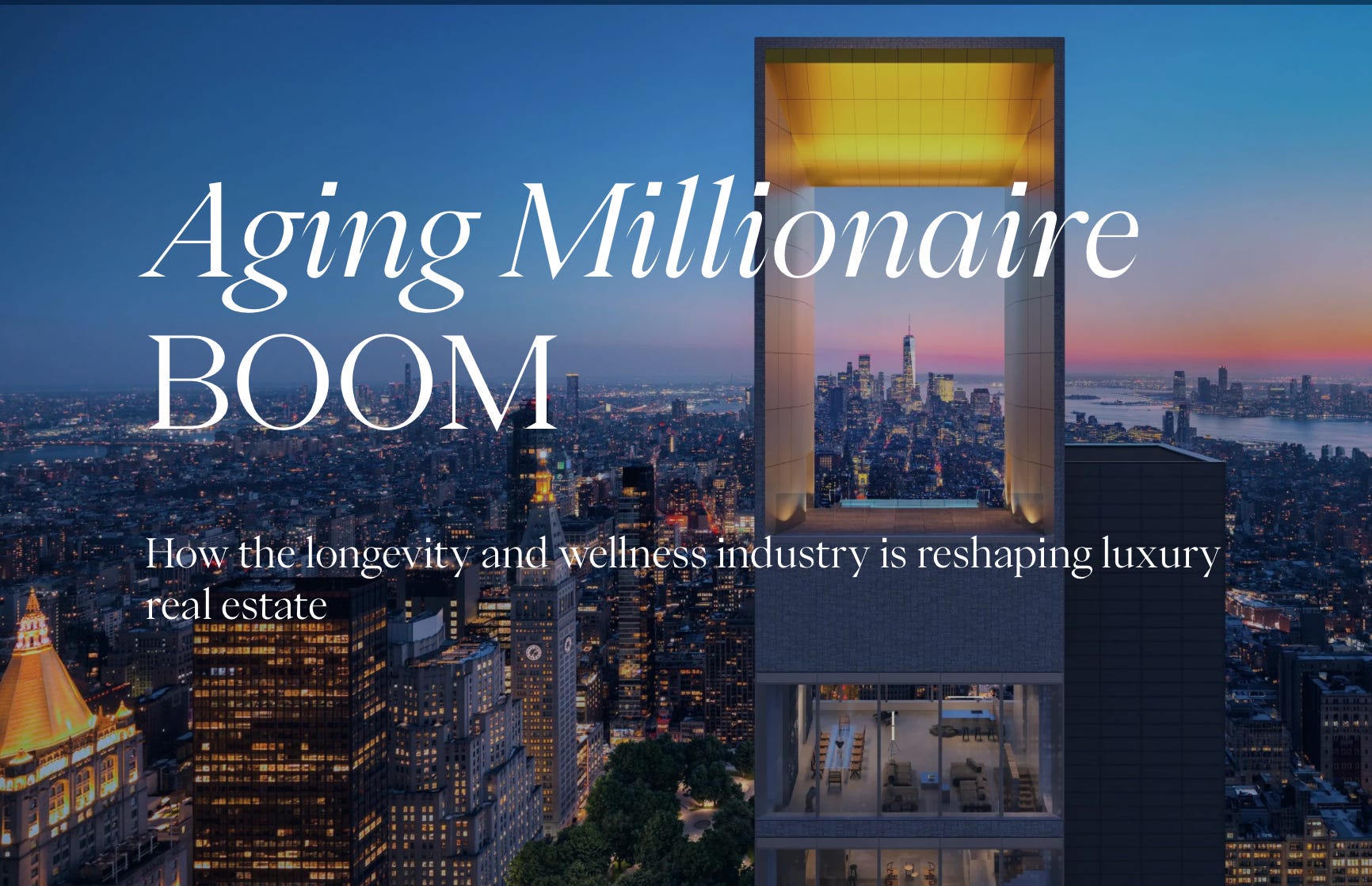
I have edited this post to remove images that could be subject to copyright and have provided links instead.
Patrick Sisson, a writer I have long admired at Fast Company, writes Want to live forever? There’s a house for that, all about “longevity architecture.” He describes it as “less about making an aesthetic statement than it is about bodily optimization,” but I have something to say about that.
This is a new name for what I have long described as “healthy homes.” Sisson name-checks our historic precedents, including Alvar and Aino Aalto’s Paimio Sanatorium and Richard Neutra’s Lovell Health House. I discussed both in my last post on healthy design: Minimalism is not a style; it’s a prescription.
The new Longevity Architecture is popular with the very rich. Sisson quotes the CEO of the International Well Building Institute (which had a wellness real estate spinoff years ago):
“An important part of this context is that longevity feels like the new luxury good,” says Rachel Hodgdon, IWBI’s CEO and president. “The billionaire’s quest to live forever, the notion that self-care, quality experiences and mindfulness and wellness can extend not just our lifespan, but also our health span.”
But this is my first problem with the concept. Sisson points to a Sotheby's luxury outlook report which focuses on 262 Fifth Avenue where “a big part of the marketing pitch includes expansive wellness features, including air filtration, radiant-heated flooring, fresh air recirculation on an hourly basis, and Lutron systems that allow exacting control over environmental factors.”

But I have written about this building and said: “262 Fifth pushes unsustainability to new heights.” It is so thin and so tall, “I cannot even begin to estimate the upfront and operating carbon footprint per square meter or per occupant, but it is going to be outrageous.” I complained,
“If the cost of this building was only measured in money, one might just say, who cares, it’s their money, if they want to live in something like this. But it’s not just money; it’s carbon dioxide emitted while making the concrete, steel, aluminum and glass, and it’s being emitted now. The rich might be able to afford the real estate, but the rest of us can’t afford the carbon.”
So the billionaire owners get to sit inside with their fresh air, water, and circadian lighting while poisoning the world. I concluded, “This is why we need a big honking progressive upfront carbon tax to put a real price on the environmental cost of these kinds of buildings.” Yet it can be marketed as “longevity architecture.” Longevity for who? I think that is a bit of a contradiction.

Then there is the work of Kas Bordier, the founder of Mavi, a design consultancy, who says, “Longevity architecture should become a standard for the industry, with people looking at the health rating of the space the same way as the energy rating.” I totally agree. She also built a terrific website, Longevity Architecture, describing “the science and design of built environments that measurably extend human healthspan, cognitive performance, and biological resilience.”
“Longevity Architecture is the practice of designing buildings and interiors that actively support human health over a lifetime. It brings together what we know about light, air, sound, temperature, materials, and spatial design to shape spaces that help people think better, sleep better, and age more slowly.”
I have spent some time reading her essays, and they should be read widely. She understands the difference between thermal comfort and thermostat control, the importance of dealing with noise, and pitches Passive House:
“Passive House is not a luxury specification. It is a rational economic decision with compounding health returns. The 4 to 6% premium buys measurably better air, measurably better acoustics, measurably better thermal stability, and measurably lower operating costs for the lifetime of the building. The case is no longer theoretical. It is empirical, economic, and increasingly urgent.”
Where it all falls down.
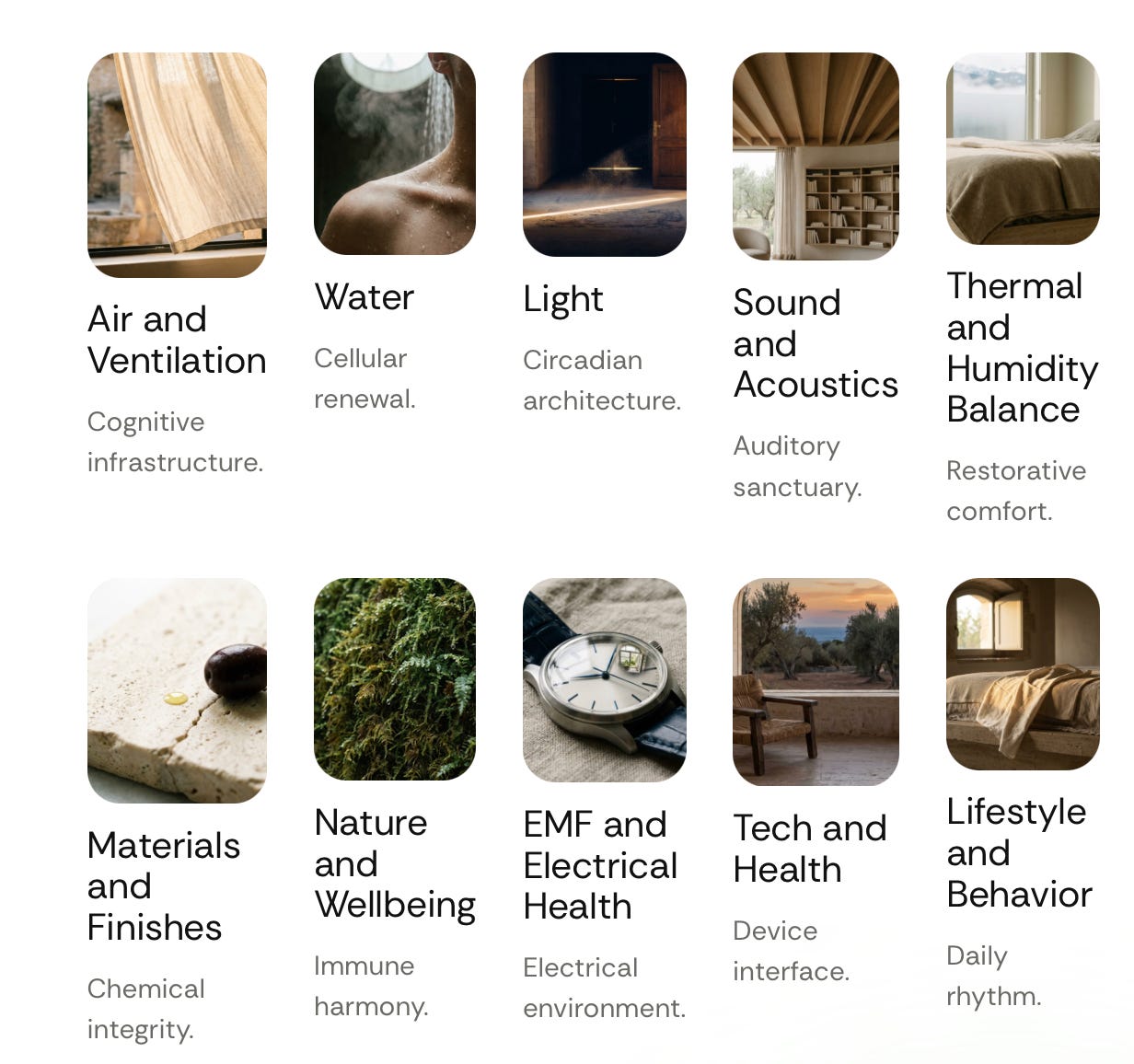
It’s all wonderful stuff- fresh, clean air, filtered water, healthy materials, biophilia, quiet and comfort. What Kas Bordier and the other promoters of longevity architecture don’t seem to mention is the single main cause of reduced longevity: falls. Mavi has 129 factors covering “every domain measurable” and none of the ten domains deal with fall prevention or mobility.

According to the CDC, “unintentional falls are the leading cause of injury and injury death among adults aged ≥65 years.” Roughly 1 in 4 older adults falls every year — over 14 million people — generating about 3 million ER visits and 1 million hospitalizations annually. In 2024, 43,020 older Americans died from preventable falls, 55% of which happened in the home.
Click here to see the living room
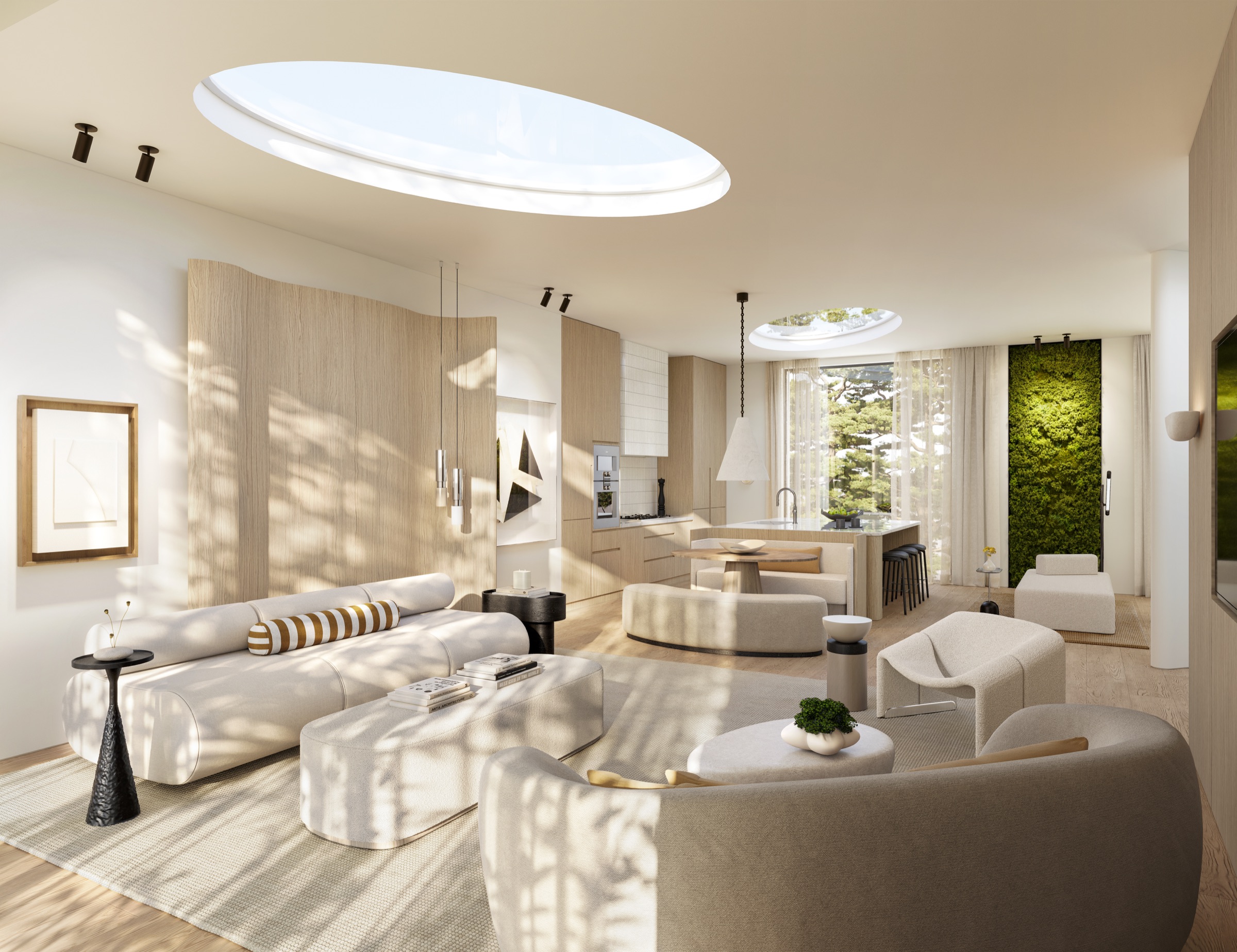
But if you are serious about longevity, you have to deal with this. So let’s look at the model residence where “Kelly Hoppen sets the interior language. Kas Bordier sets the longevity specification,” starting with the living room. First of all, there is only one silly chair that would be impossible to get out of, and the rest are sofas. When you get older, chairs are preferred.
“Sofas, couches, and benches usually have a single, shared seating surface and may lack armrests on both sides. For seniors with limited mobility, couches can be difficult to get into and out of. Individual chairs with armrests offer the most support and safety when standing up or sitting down.”
Boomer billionaires don’t have limited mobility yet; they have gyms and coaches. But many likely will at some point. So many of the furnishing choices, from the sofas to the stools in the kitchen, are wildly inappropriate for older people.
Click here for a walkthrough of the apartment
Then there are the colours. The seating is beige, the walls are beige, the carpet is beige, everything is beige. When you get older, you need a bit of contrast. One study, Contrast Sensitivity Impairment is Associated with Limitations of Physical Functioning and Activities of Daily Living Among Older Adults, found:
“Contrast sensitivity or the ability to distinguish objects from their background is an important yet overlooked component of visual function. While routine eye exams assess visual acuity using high-contrast letters, they do not evaluate contrast sensitivity, a key aspect of vision required for detecting subtle differences between objects and their background.”
Contrast sensitivity impairment is associated with a 50–60% higher hazard of incident mobility and stair-climbing difficulty. And here we have a sea of beige and almost no contrast anywhere.

Then there is the question of the effect of all this circadian lighting. I have been discussing the importance of natural light, circadian rhythms, and appropriate colour temperatures for years, most recently when I complained about my classroom. I have also written Boomer Alert: You Need Better Lighting to Compensate for Aging Eyes, noting that “the older eye loses some sensitivity to short wavelengths ("blue light") due to progressive yellowing of the crystalline lens.”
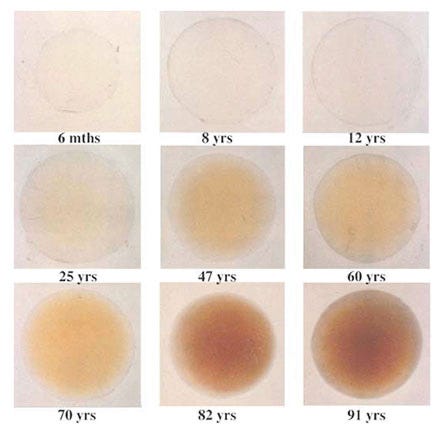
This is your eye as you age. The lens is going yellow and cuts out 72% of the blue by the age of 80. The rods in our eyes, which deal with low-level light, are sensitive to the blue-green end of the spectrum, yet our fancy lighting in this apartment is dialling back the blue light to give us very warm 2700°K and the output levels to 250 lux. Meanwhile, we are looking at all this beige furnishings through beige lenses; I’m surprised we can see anything at all.
Circadian lighting is wonderful; I invested in Hue RGB bulbs in my house so that I could tune them for the right light at the right time. But where many people have thermostat wars, spouse Kelly and I have colour temperature wars. My aging eyes want the light white and bright; she is a few years younger and wants it warmer and dimmer. Douglas Steele, in Circadian Lighting: a Neuroscientist’s Perspective, explained:
“The idea that there can be a “specific recipe” for human-centric lighting that can be universally applied to all persons is unrealistic because of the tremendous variability between individuals based on age, setting, genetics, environmental factors, individual physiology, and personal behaviors such as coffee or alcohol consumption, ambient lighting preferences, and undesired exposure from other ambient light sources. While many of these factors could potentially be accounted for as models such as these become increasingly sophisticated, no effort has been made to do so.”
We are talking about longevity, about designing for older people. If you design an entirely beige room full of armless sofas with warm low circadian lighting, you are going to have older people falling down, and that doesn’t do much for longevity.
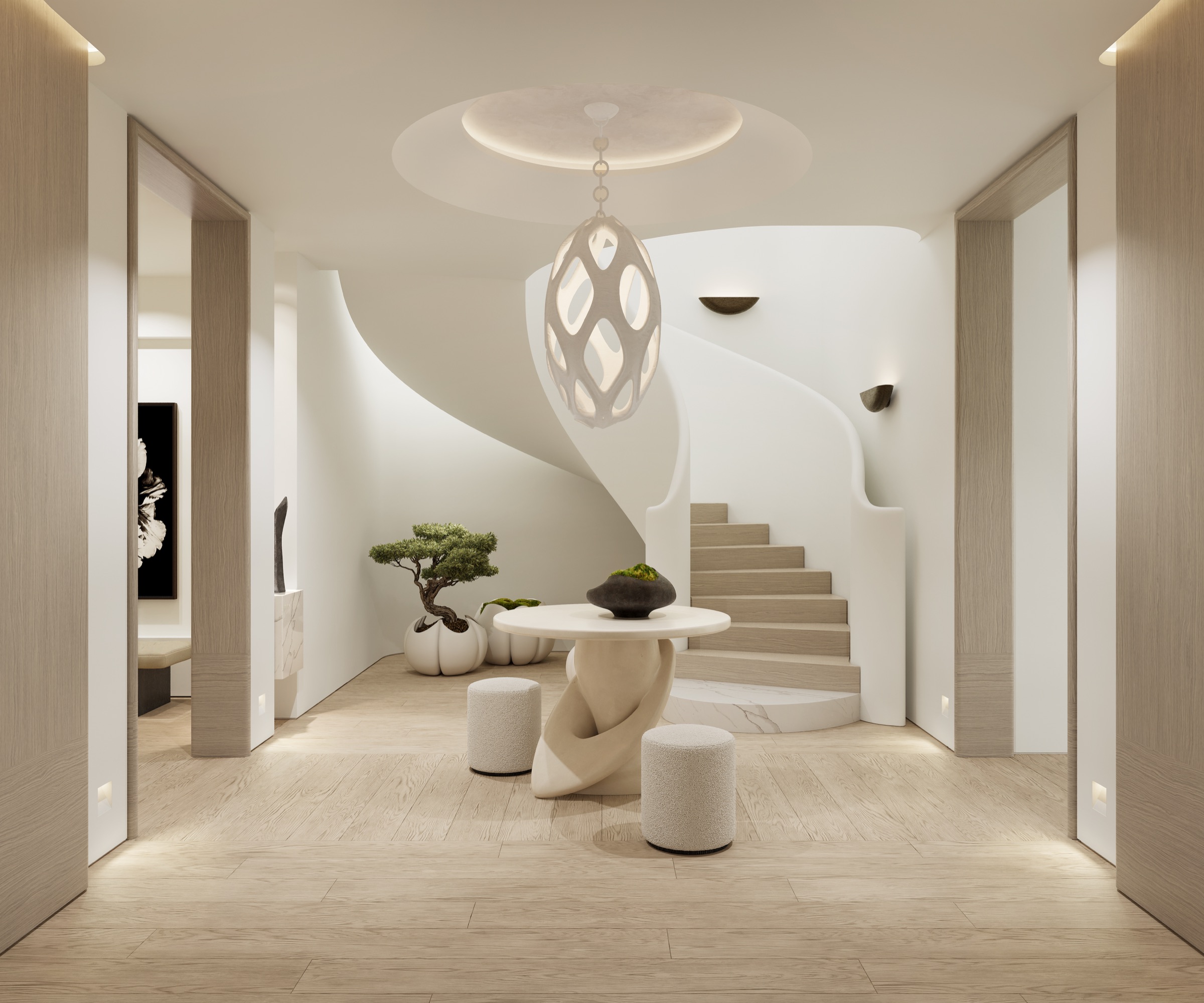
Click here to see stair in hallway
I should stop, but nobody should put a circular stair in a home designed for longevity. There is a reason that they are generally banned in exit stairs; they are dangerous. Your left foot has a different tread run than the right foot, and your brain has to figure this out, and when your brain gets older, it gets harder. You need a proper handrail, not just the top of a wall. And according to AARP, you need 300 lux, not 250.
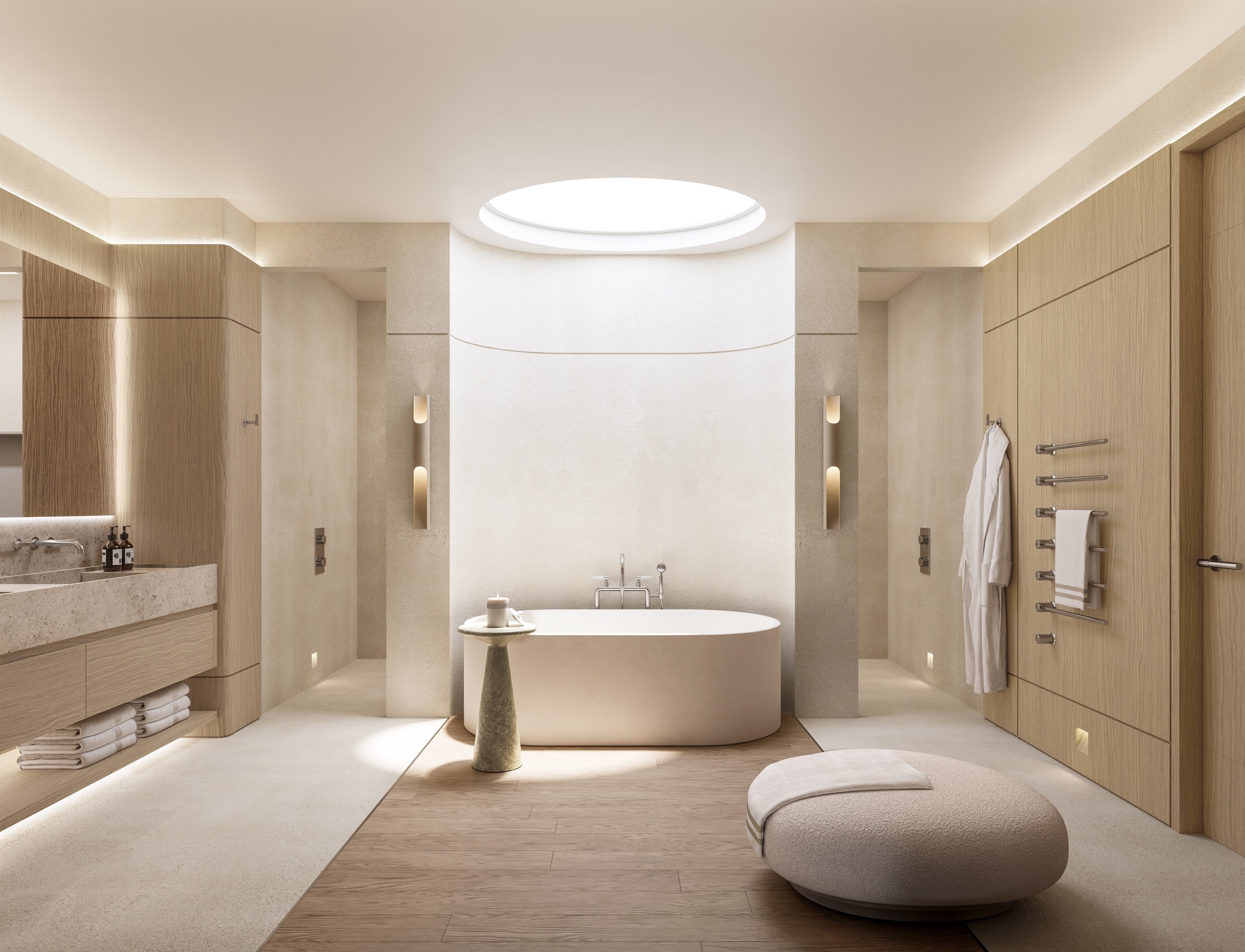
Click here to see main ensuite bathroom
And don’t get me started about freestanding killer bathtubs with thin walls and no grab bars.

I am very impressed with Kas Bordier’s Longevity Architecture website. After reading about all these billionaires, it is a pleasure to read her essay on The Equity Question, where she makes the point that everyone should have these benefits.
“If the evidence is correct (that indoor environmental quality measurably affects cognitive function, disease risk, sleep quality, and biological aging) then the distribution of building quality is, in effect, a distribution of health. And that distribution is profoundly unequal.”
And her conclusion, which I agree with:
“The challenge for longevity architecture is to resist the temptation of exclusivity. If the discipline serves only those who can afford it, it will have failed its most important test. The measure of its success is not the quality of the best buildings, but the quality of the average ones.”
But when I look at the longevity lessons translated into the finished interior shown on her site, I am worried that it all sounds lovely but does not reflect the hard reality: this is a dangerous design, one giant beige trip-and-fall hazard. Being a billionaire doesn’t protect you from that; ask Ivana Trump. It is the antithesis of longevity architecture and design.
There are two recurring elements in deaths of the elderly that seem to also have standing from years before we were gathering data. I read a story years ago in which a fictional doctor called pneumonia “the old man’s friend” because it was so often the proximate cause of death for so many elderly and frail men. And for years and years I’ve heard story after story about an elderly relative, neighbor, or an acquaintance’s relative and they all began with “they fell” and the rest was predictable.