Finally, Ontario might get sensible e-bike regulations
Of course, with Doug Ford in charge, anything can happen.

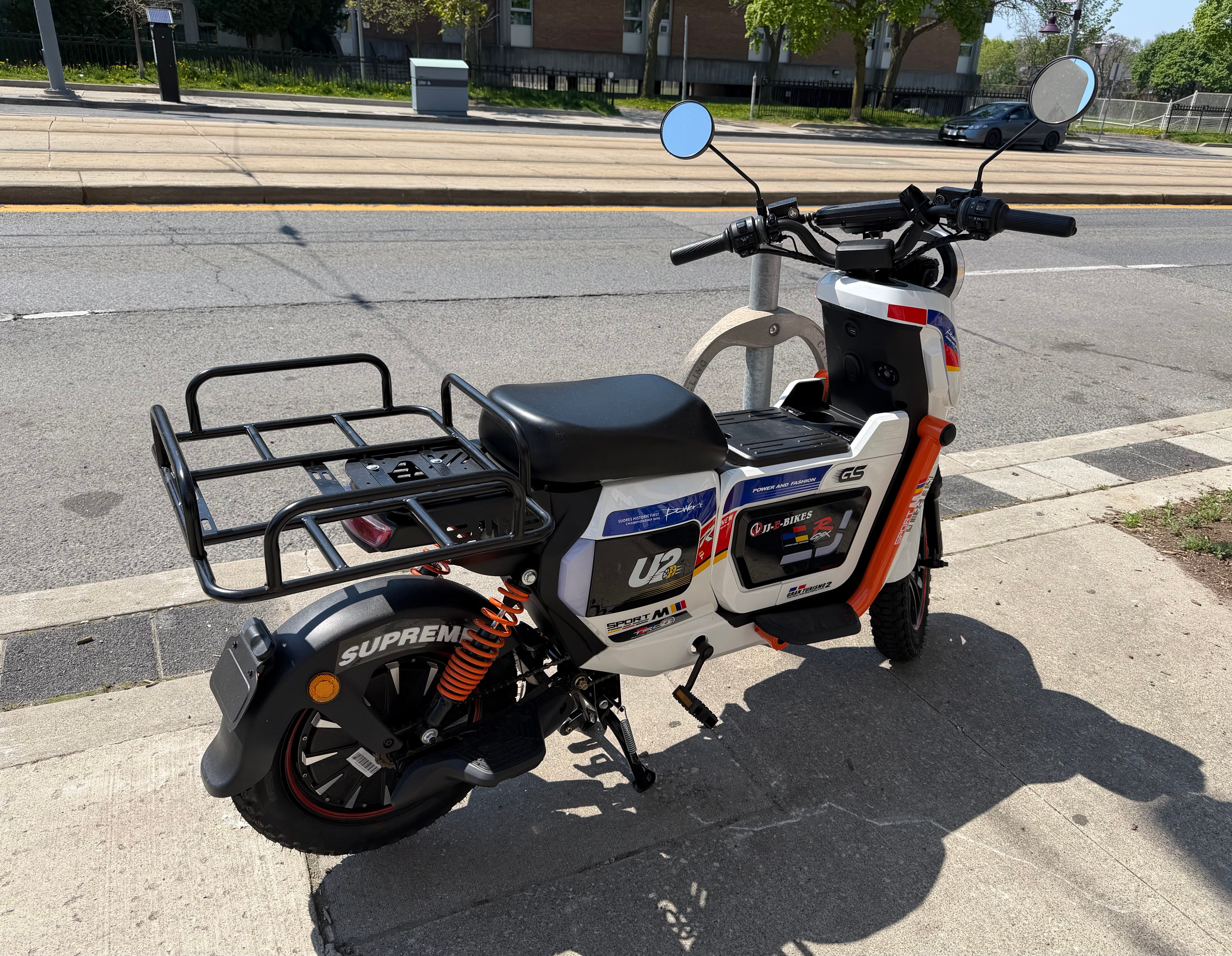
I saw this e-thing on the way to the gym the other day. I don’t know what to call it; in Ontario, Canada, an e-bike cannot go faster than 32 km/hr or have a motor with a nominal output greater than 500 watts. Online, it is described as an “electric scooter” with a 1500-watt motor and capable of going 60km/hr. This would be considered an electric motorcycle, but of course, there is no licence plate on it because it has dinky pedals, there is no enforcement in Ontario, and the current rules for e-bikes are ridiculous.
However, at long last, this may change; the Province has published a proposal for modernizing the rules, with the intent of “providing greater clarity for riders, industry, municipalities, and enforcement,” and “Supporting the safe use of e-bikes as a sustainable transportation option.”

I have often complained about the stupid rules here, and quoted Toronto city councillor Diane Saxe, who told the CBC:
“We need a clear, simple, straightforward rule that a nine-year-old can explain, and with that, we then have an opportunity to do the kind of education, followed by enforcement, that has a chance to make a difference.”
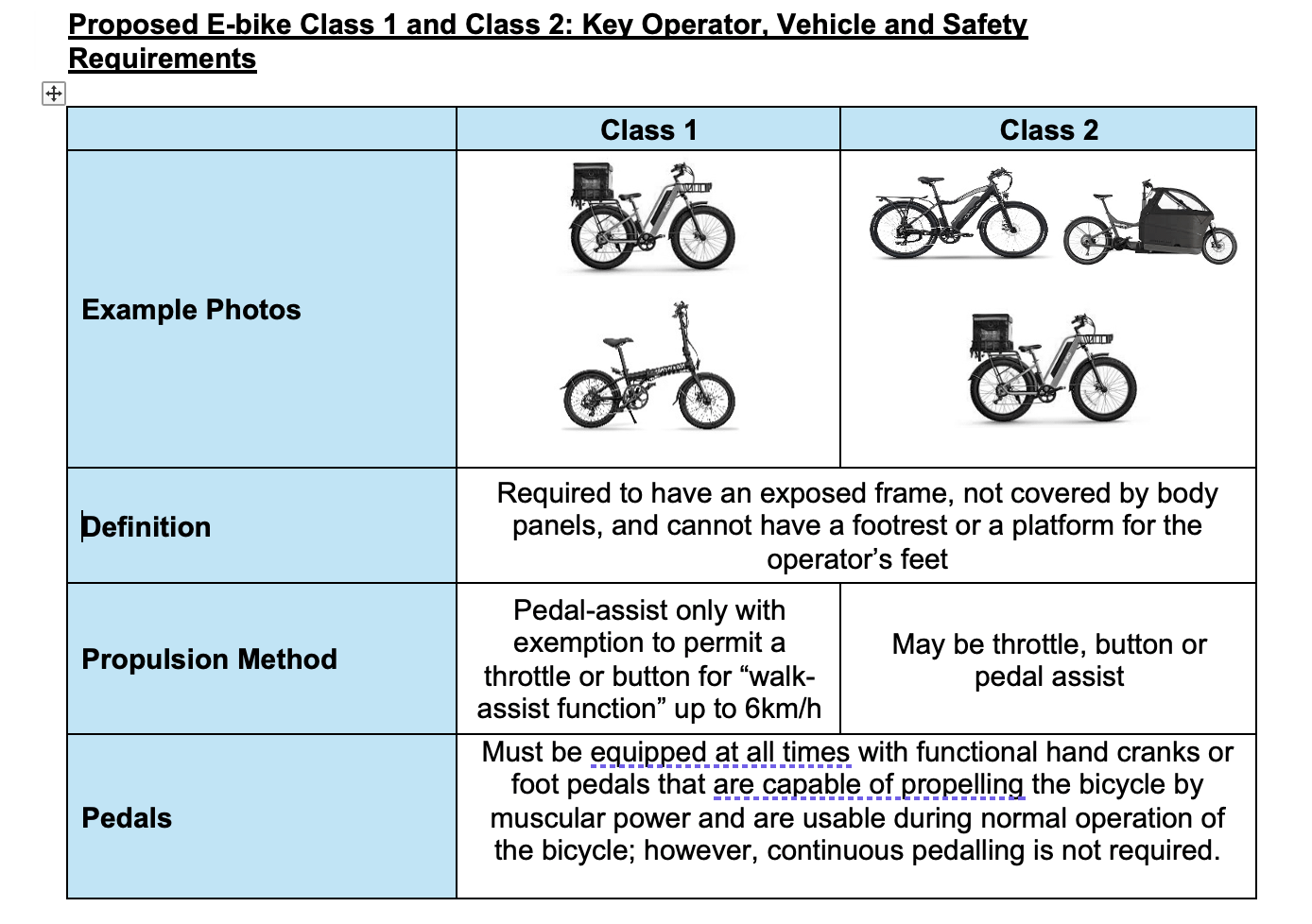
Unfortunately, that’s not quite what we are getting. However, there are some great improvements, the biggest and best being that the big scooters and Vespa-style e-things are no longer considered e-bikes. No body panels, no platform as you get on a Vespa.
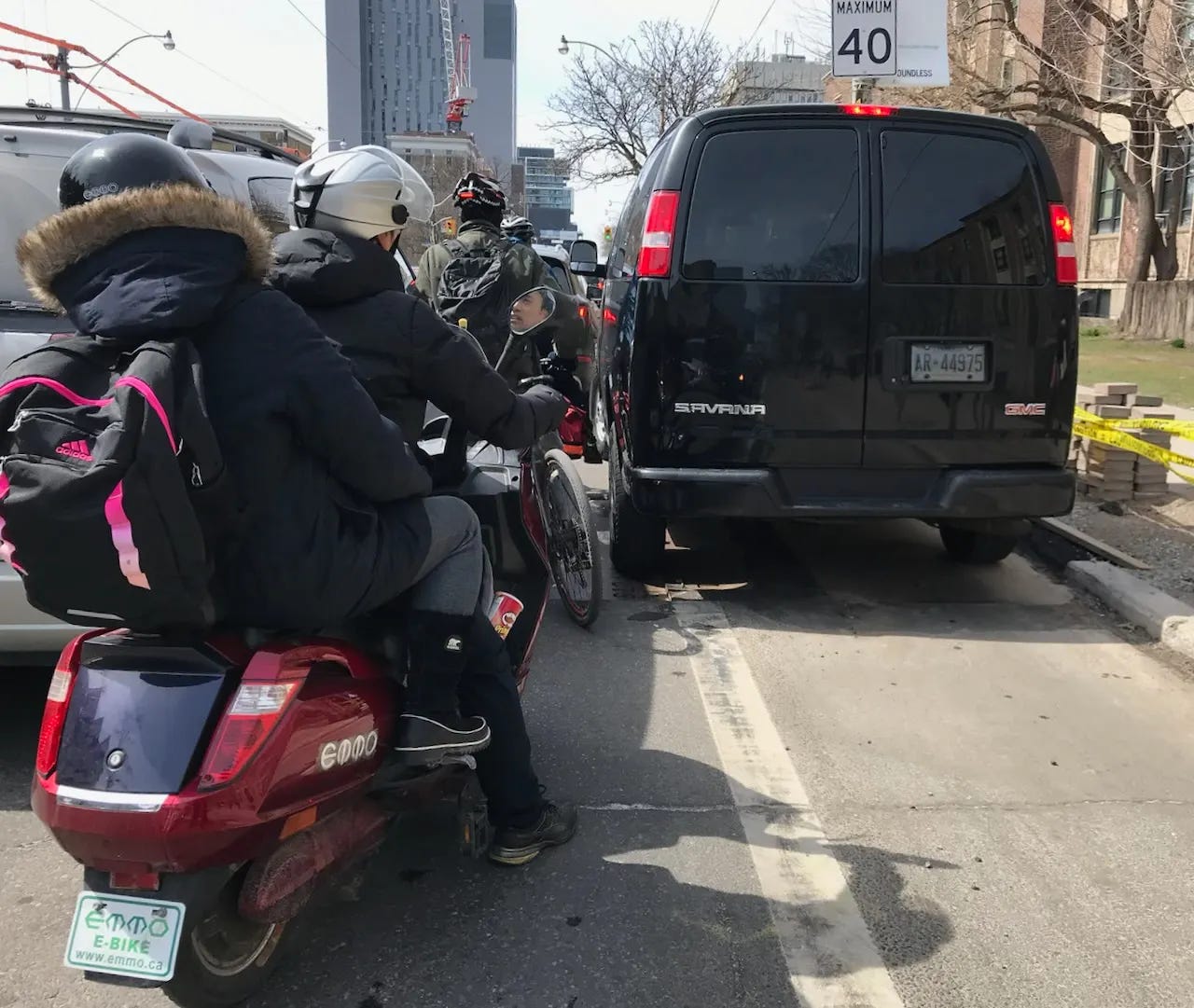
I can’t tell you how many times I have been stuck behind these big Emmo e-things or have been dangerously passed by them. Little decorative pedals no longer qualify; they have to be functional, capable of actually moving the bike. As Virginia Block’s Amego bikes notes,
“Anything that looks like a moped or motorcycle, the high-power, throttle-only machines that have flooded the market, will be reclassified and require a motorcycle licence (M or M2-L), insurance, and registration…. If you bought a no-name "e-bike" off a marketplace site that hits 60 km/h on a throttle and has no functional pedals, this proposal is squarely aimed at it. This is the category the Canadian Electric Bicycle Association and Velo Canada Bikes have been raising alarms about: vehicles being sold as bicycles that are functionally electric mopeds, with no operator training, registration, or insurance behind the rider.”
The other great change is that it’s now legal to carry kids; previously, you had to be 16 to be an operator or a passenger. This was incredibly silly and ignored by everyone (except, occasionally, the police). As consultant Jamie Stuckless noted, “This ban on child e-bike passengers is not evidence-based or justified through safety research or the experiences of people in other jurisdictions in Canada, or around the world.” Now, “passengers of any age are permitted, provided a seat is available (either an original equipment seat or a seat designed to be compatible with the vehicle).” Now my grandchildren will be able to legally sit in their cargo bike.
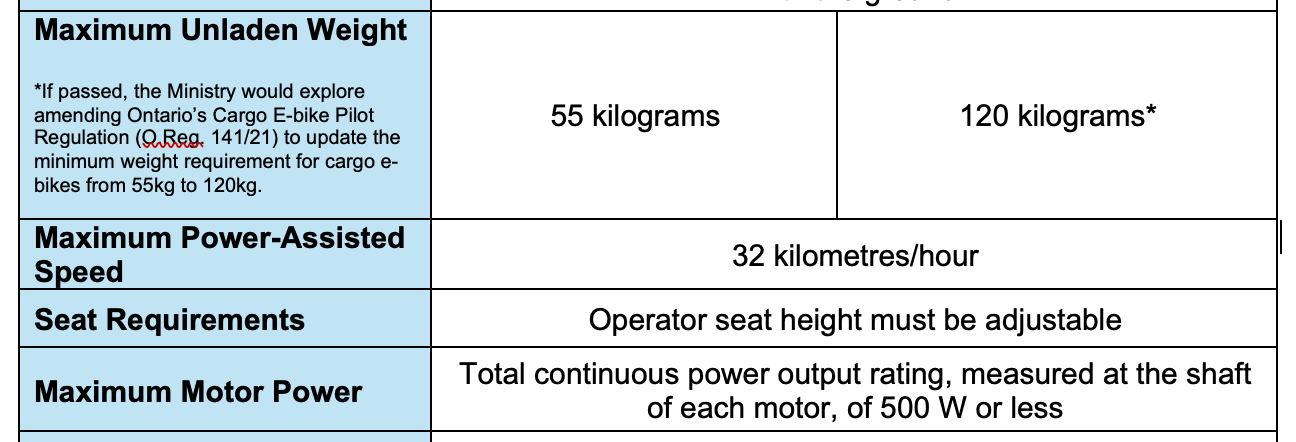
There are things I am not crazy about, which I believe fail the Diane Saxe test of “a clear, simple, straightforward rule that a nine-year-old can explain.” Why are there two classes? The differences appear to be only the type of throttle (one is for walk assistance and the other works at any speed) and the weight. What kind of e-bike could weigh 120 kilograms (264 pounds)?
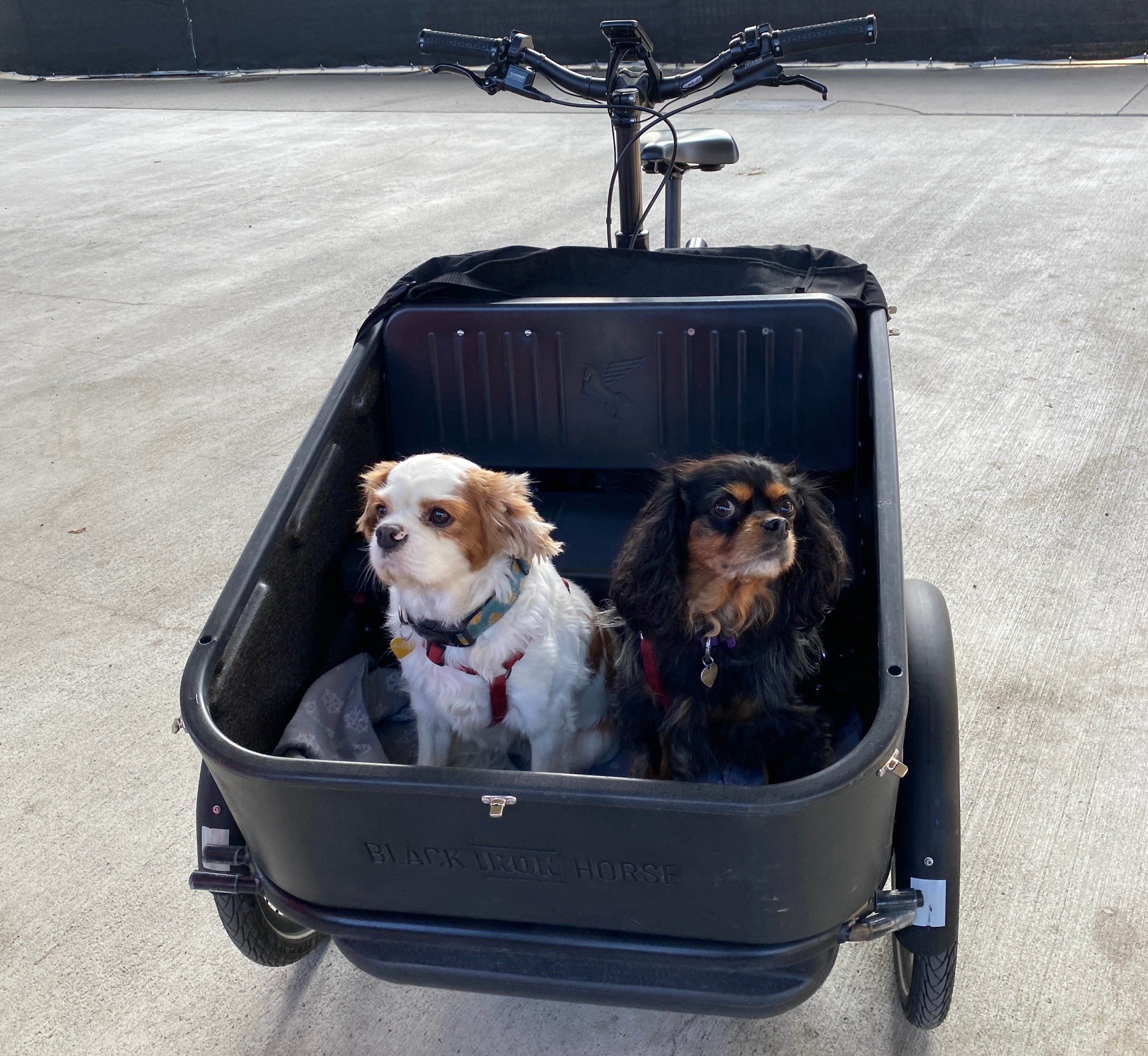
My two grandchildren and their dogs fit into their Black Iron Horse cargo bike, and it weighs 55kg.

Speed is another issue. In Europe, the motor cuts out at 25km/hr, a comfortable speed for bicycles. As I noted in an earlier post on this subject, the original European e-bikes were what I call “bikes with a boost.”
“When e-bikes came to the USA, somehow, American exceptionalism kicked in. Our distances are greater! Our hills are steeper! Our riders are heavier! So, of course, they made their own standard, ignoring years of European experience and raising the speed to 20 MPH (faster than most cyclists) and the motor power to 750 watts. They threw in a Class 2, like Class 1, but with a throttle, so you can sit on it and go 20 MPH all day without pedalling, thanks to those 750 watts.”
Jamie Stuckless notes in her excellent report on ebikes in Canada
“North America is an outlier when it comes to having a maximum speed of 32km/h (20 MPH) for e-bikes (compared to 25km/h), however, surveys of North American e-bike users have highlighted the ability to keep up with the flow of motor vehicle traffic while cycling on-road as a perceived safety benefit of riding an e-bike.”
I have never understood this argument. What should matter is staying with the flow of bike traffic, and it’s not going 20mph. For that matter, neither are the cars; they are going much faster.
Then there is the maximum motor power of 500 Watts. Nobody makes a 500-watt motor; Europe is 250 watts, and the USA is 750 watts. They might all be the same motor with different controllers. And nobody mentions torque or peak output, which determine whether your e-bike is sedate or a rocket.
I think this could have been a great opportunity to realign with the European standards instead of having one foot in each continent, but I am apparently an outlier here; everyone seems happy with 32 Km/hr except me.
There are other issues that the new regulations should deal with, but don’t. As Kevin McLaughlin of Zigg Bikes notes, “they first struck me as picking an easy target -(marginalized workers on 'big' moped style bikes, and not really addressing the key issues: illegal power, battery safety, rider training - and especially any real guide to some actual enforcement.”
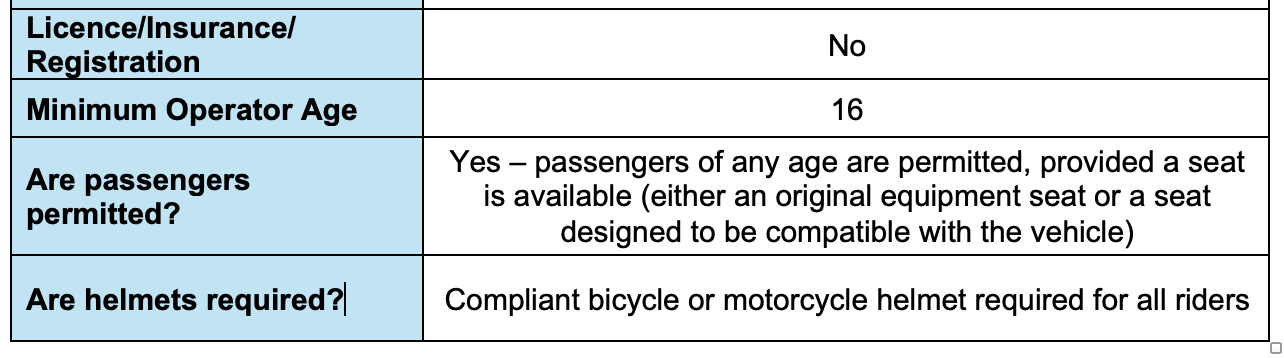
A key point that I suspect a lot of people were holding their breath about was the licence and insurance requirements. As Amego notes, “The good news: properly designed e-bikes from established brands stay legal, stay licence-free, and stay on the path you’d expect them to be on.”

But this is Doug Ford’s Ontario, where changes to the rules of the road can be capricious, arbitrary and based on his personal whim. (see speed cameras and bike lanes) He hates bikes, and I worry that he will say, “I saw someone on an e-bike go through a red light,” and the news won’t be so good.
I totally disagree we should let people do what they want the laws are fine and I ride an electric unicycle and I've seen cyclists hit close to my top speed 40+kmh it can go 60 but I do not and I want to get an electric dirt bike later on my own opinion is simply have basic self awareness and respect like obviously if someone is walking I slow down pop on the grass and go around them and alwayse give priority to pedestrians on sidewalks or bike paths and never even speed much more than most cyclists can hit I just really like the range of my device and on open roads the fact I can cruise at a nice 50 like down an open flat road on the way home in a bike lane not too much different than a cyclists but I'm not a super athletic long distance cyclist like the guy I ran into but my biggest takeaway is tbh who cares these insurance companies already ruin any affordable way of getting around and you guys want to give them and cops more power to scam and harass people using practical means of transportation reducing traffic and emissions hell most of the year is too fkn cold even to use these devices
Not sure whether this is allowed....but Saul Griffith's post on this is excellent.
TL:DR
"The solution is not to limit the power of the bike, but to strictly enforce a speed limit."
https://energyandstuff.substack.com/p/lets-get-the-rules-on-e-bikes-and
Gov. Healey here in MA has filed a Ride Safe Act which recognizes this key aspect. I've been in touch with my elected officials hoping to nudge this along. Good luck, Lloyd, with Doug Ford :-)
https://www.mass.gov/news/governor-healey-files-ride-safe-act-to-strengthen-public-safety-regulate-e-bikes-mopeds-and-scooters