
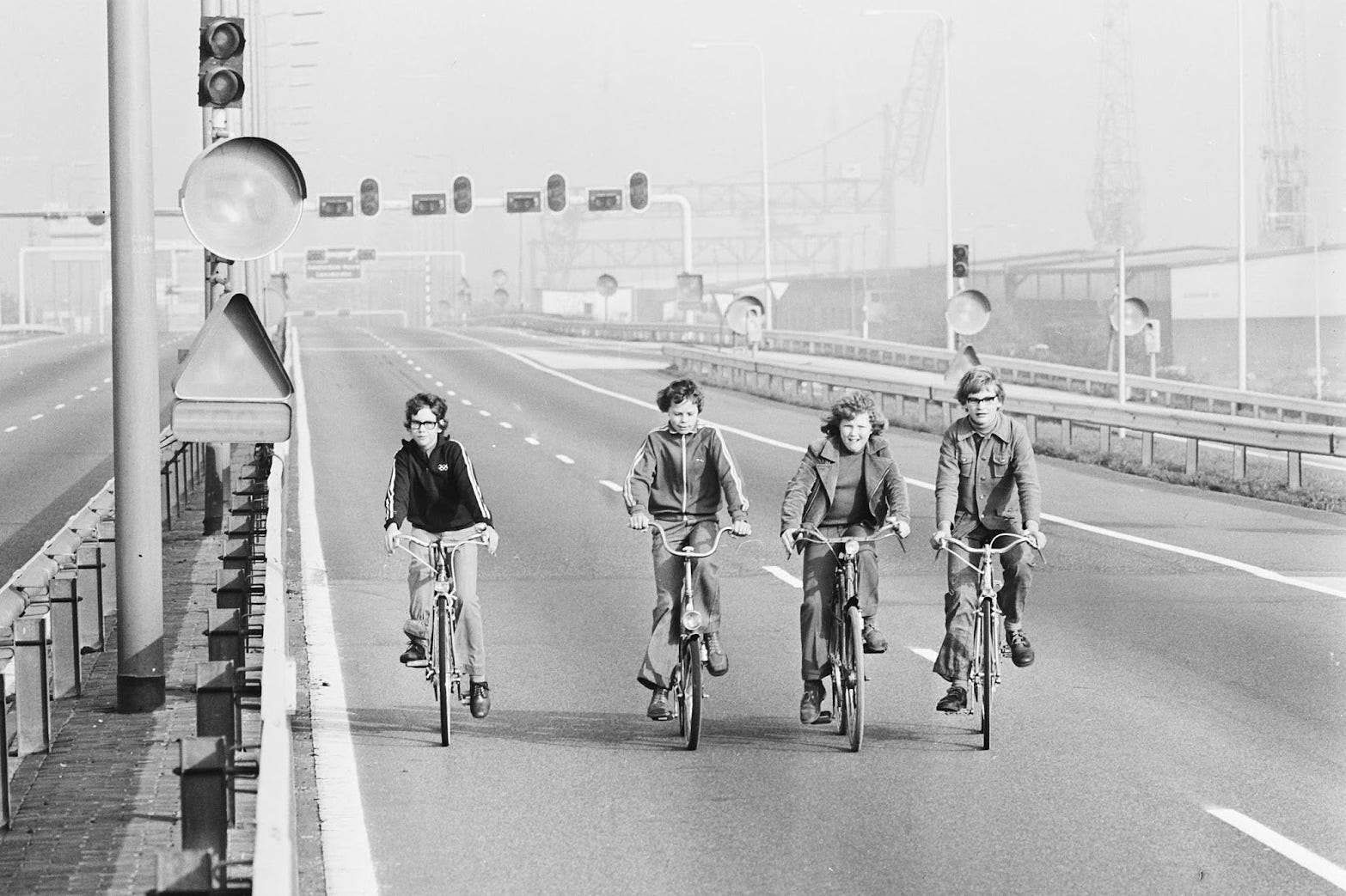
Remember the seventies, when you could bicycle on highways because there was no gasoline for cars? When speed limits were reduced? When Jimmy Carter put solar panels on the White House roof? When governments, architects and builders cared about energy conservation and efficiency?
Those happy days are here again as the International Energy Agency lists “a range of demand-side actions that governments, businesses and households can take to alleviate the economic impacts on consumers of the disruptions to oil markets stemming from the war in the Middle East.”
The IEA is concerned that the blockade of the Strait of Hormuz is keeping 20 million barrels per day out of circulation, almost 20% of global consumption. IEA executive director Fatih Birol says, “today’s report provides a menu of immediate and concrete measures that can be taken on the demand side by governments, businesses and households to shelter consumers from the impacts of this crisis.”
Coincidentally, these measures are the same ones many people have suggested we need to take to reduce our carbon emissions and delay the effects of climate change. Nobody much cared then (and in Ontario, where I live, they raised the speed limits and reduced the cost of driving). Yet here we are today with the IEA recommending:
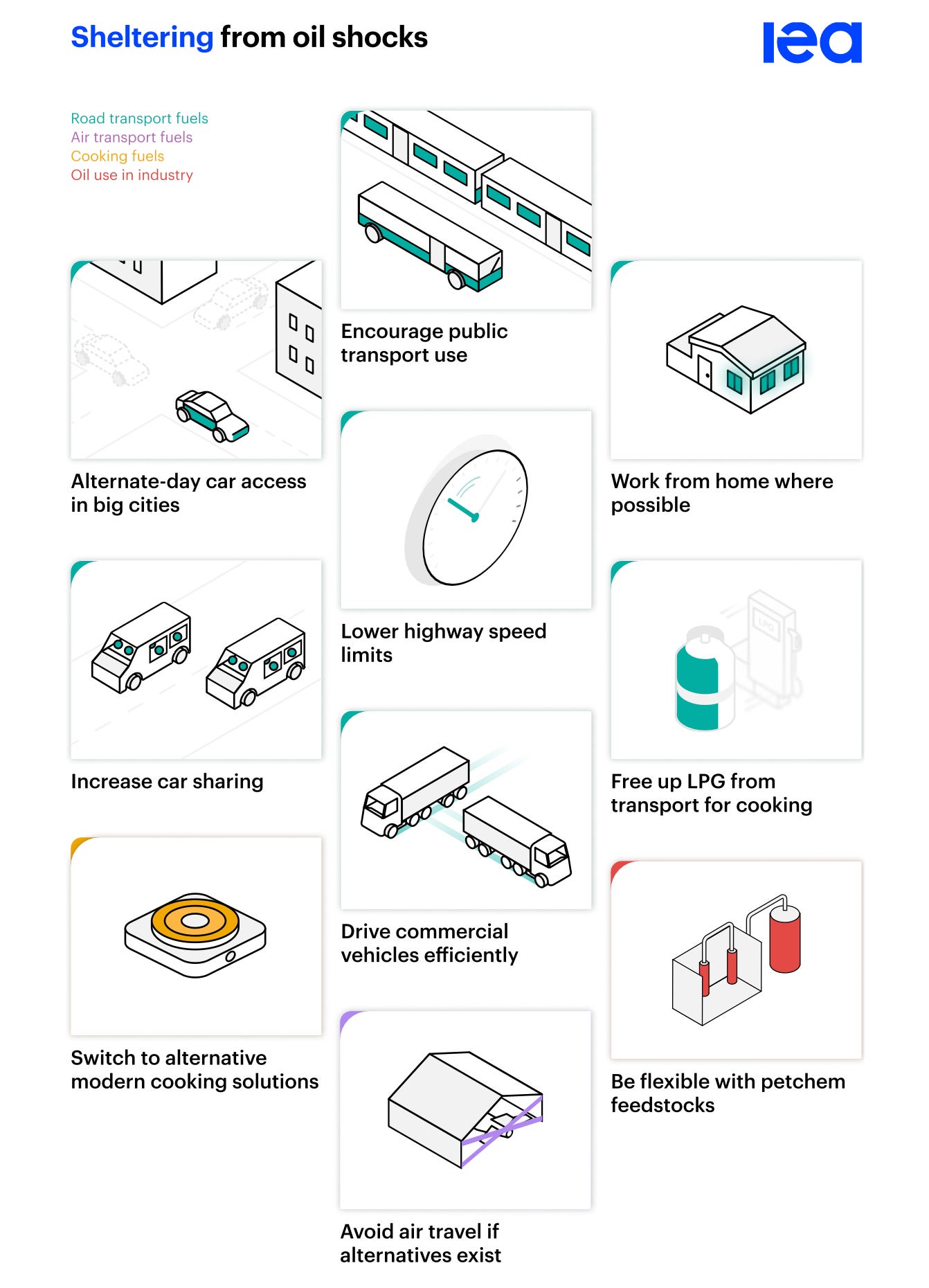
Immediate actions to reduce demand:
1. Work from home where possible
Displaces oil use from commuting, particularly where jobs are suitable for remote work.
2. Reduce highway speed limits by at least 10 km/h
Lower speeds reduce fuel use for passenger cars, vans and trucks.
3. Encourage public transport
A shift from private cars to buses and trains can quickly reduce oil demand.
4. Alternate private car access to roads in large cities on different days
Number-plate rotation schemes can reduce congestion and fuel-intensive driving.
5. Increase car sharing and adopt efficient driving practices
Higher car occupancy and eco-driving can lower fuel consumption quickly.
6. Efficient driving for road commercial vehicles and delivery of goods
Better driving practices, vehicle maintenance and load optimisation can cut diesel use.
7. Divert LPG [propane] use from transport
Shifting bi-fuel and converted vehicles from LPG to gasoline can preserve LPG for cooking and other essential needs.
8. Avoid air travel where alternative options exist
Reducing business flights can quickly ease pressure on jet fuel markets.
9. Where possible, switch to other modern cooking solutions
Encouraging electric cooking and other modern options can reduce reliance on LPG.
10. Leverage flexibility with petrochemical feedstocks and implement short-term efficiency and maintenance measures
Industry can help free up LPG for essential uses while reducing oil consumption through quick operational improvements.
Many of these measures could be considered part of Living a 1.5 Degree Lifestyle, a major component of which was reducing fossil fuel consumption. There are a few more steps that could also be taken:
Ride a bike or e-bike. Cities could also implement emergency bike lanes as they did during the pandemic to provide a safer space for bikes.
Turn off AI and data centres if running on fossil fuels.
Open the borders to Chinese electric cars. Bring back incentives for drivers to switch to electric cars.
It shouldn’t have taken a crisis for this to happen; we could have been ready for it. Many have been calling for measures like these for a decade. As environmental writer Ketan Joshi notes,
“A huge congratulations to everyone who decried planned, equitable and gradual emissions cuts as too radical. Now you get to experience unplanned, unjust and whiplash-inducing emissions cuts instead. Maybe let’s not make the same mistake again?”
The IEA concludes its report with some long-term suggestions. They never mention climate because Donald Trump is threatening to kill the organization, but these “longer-term, structural measures to lower oil use can enhance energy security and affordability,” and reduce carbon emissions.
Reinforce the adoption of electric and more efficient vehicles and accelerate the installation of EV charging infrastructure.
Raise the ambition of fuel economy standards for road vehicles.
Accelerate the deployment of energy management systems in industry.
Accelerate the replacement of oil heating systems and industrial boilers with heat pumps.
Increase plastic waste collection, re-use and recycling.
Ketan Joshi is right: Let’s not make the same mistake again.
Download the IEA report here.
Sometimes I feel that the last 50 years never happened. Everything we thought we had accomplished has vanished; almost like it was a dream. Now we have entered a nightmare.
Sometimes it seems to me that the whole world never left the seventies behind. Yet another Star Wars movie comes out every couple of years. At the coffeeshop teen baristas bop to Bohemian Rhapsody while they wear their Led Zeppelin tank tops.
Yet everything else, all that stuff I thought was a step forward, we've just forgotten. Jimmy Carter wearing a sweater instead of turning up the thermostat, fuel efficient cars that aren't monstrous SUVs, etc.
And now we're bombing Iran, and people complain about soaring gas prices, just as we did in the seventies. AUGH!!!!