Architectural rendering in the age of AI
Has text-to-image artificial intelligence ruined the Evolo competition?

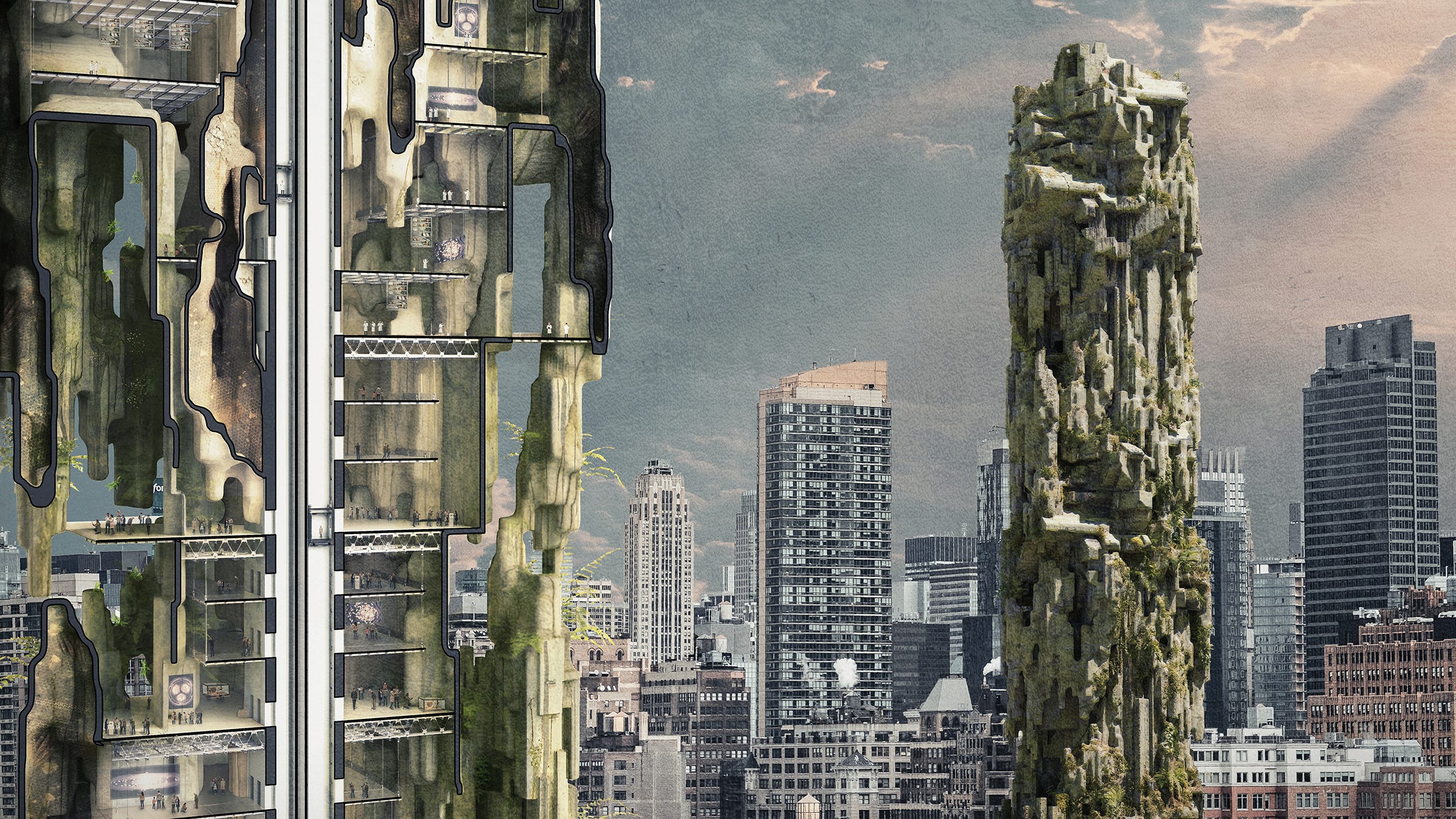
When I practiced architecture in the 1980s and wanted a rendering of a building, we would farm it out to an artist or illustrator who would charge us a couple of thousand dollars and deliver it a month later. This is why I have been in awe of the Evolo Skyscraper competitions that have been running since 2006, “to recognize outstanding ideas for vertical living through the novel use of technology, materials, programs, aesthetics, and spatial organizations."
For many years after the introduction of computers, there were arguments about the merits of hand-drawn renderings vs using computers. I noted in 2021 that it’s an argument that had been going on for forty years. I personally was always amazed by the incredible, detailed, magnificent drawings submitted to the Evolo competition. The “kids these days” were doing the kind of work we could only dream of, paying to submit entries to a competition with a top prize of $5,000, which is less than I used to pay for any one of these drawings back in the day.
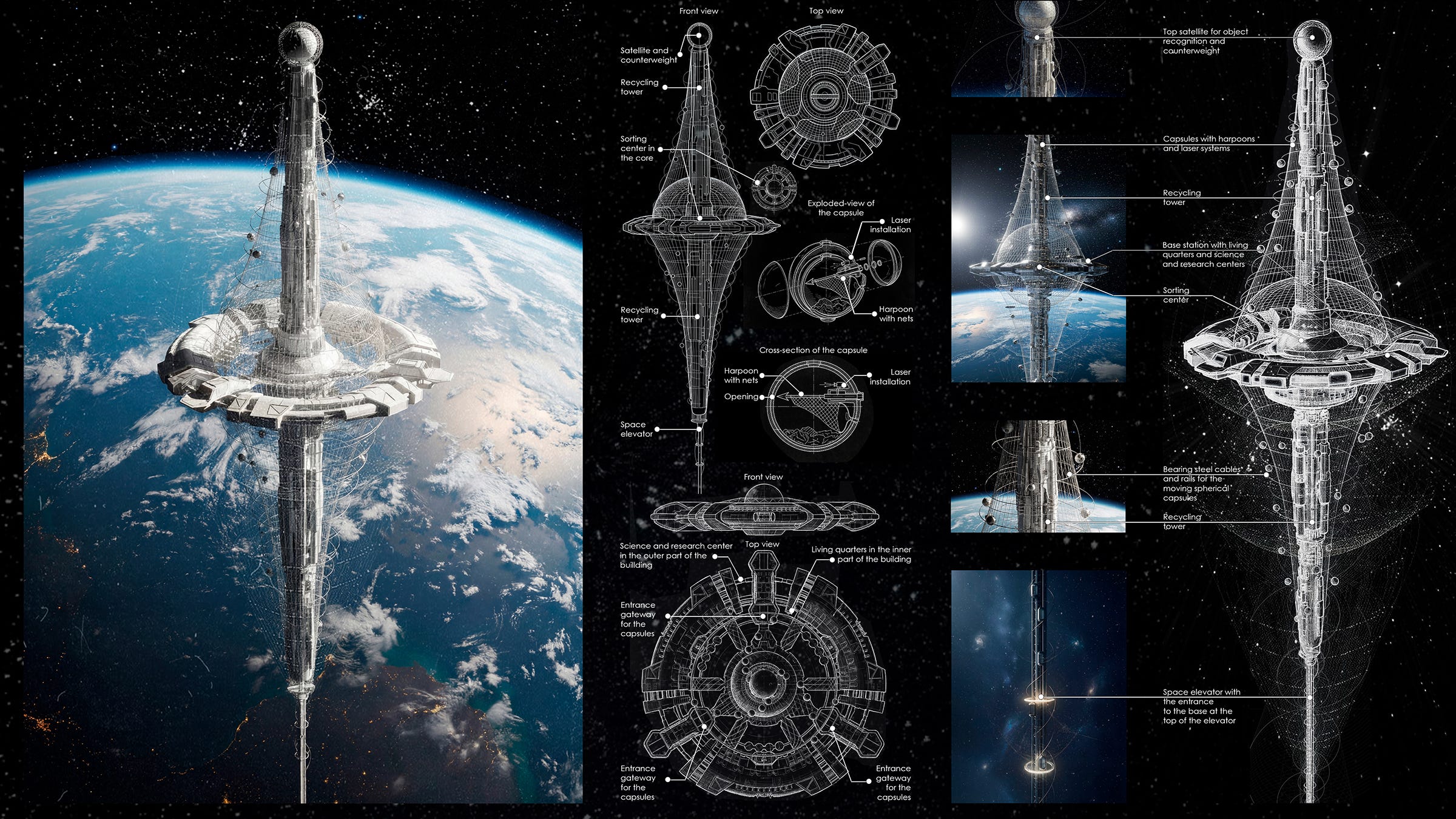
Using a computer to draw a rendering was still drawing. It still required skill. But I look at the competition entries for 2025 (just released by Evolo) and wonder, has Artificial Intelligence changed the game? My 2021 question of hand vs computer has evolved.
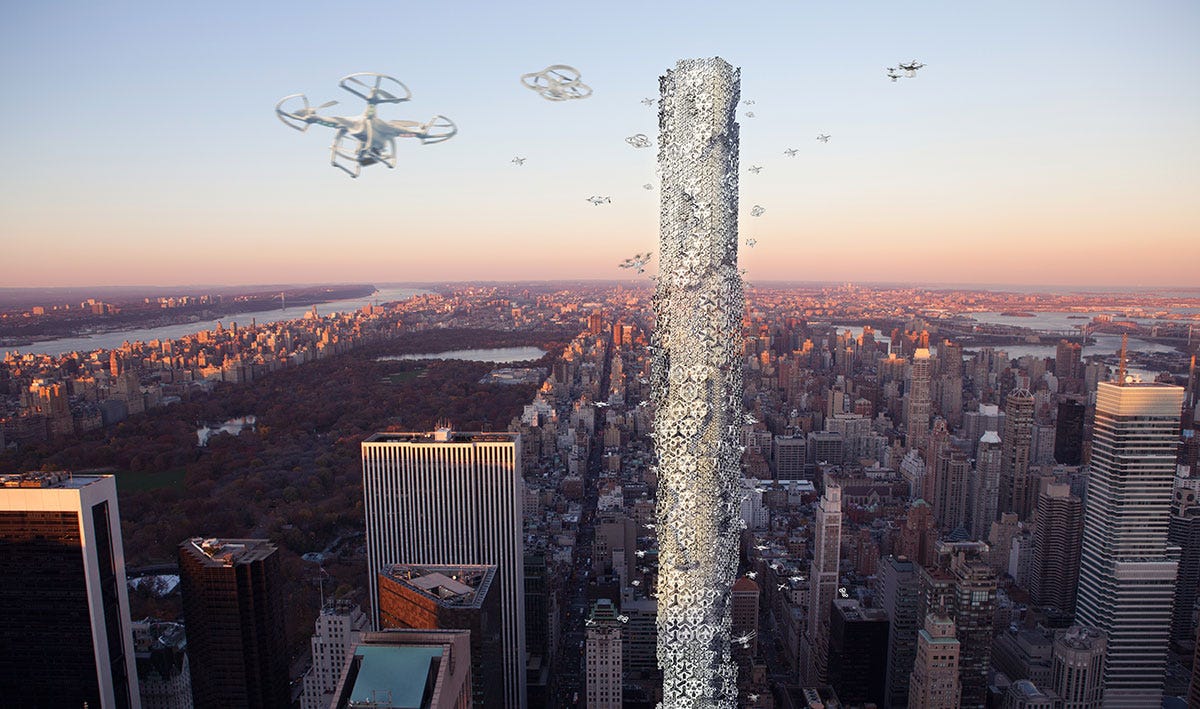
I am looking back at one of my favourite years, 2016, where the second prize winner was proposed for the site of the condo I love to hate at 432 Park Avenue in New York. I think the stories were better, and I think the drawings were spectacular. They seem prescient:
“The Hive is an infrastructure project that can better meet the emerging demand for incorporating advanced Drone technology into daily life in New York City. The project was proposed as an alternative asset argument for the usage of the land on 432 Park Avenue, the project aims to create a central control terminal that hosts docking and charging stations for personal or commercial drones (unmanned aerial vehicles) in the center of Manhattan.”
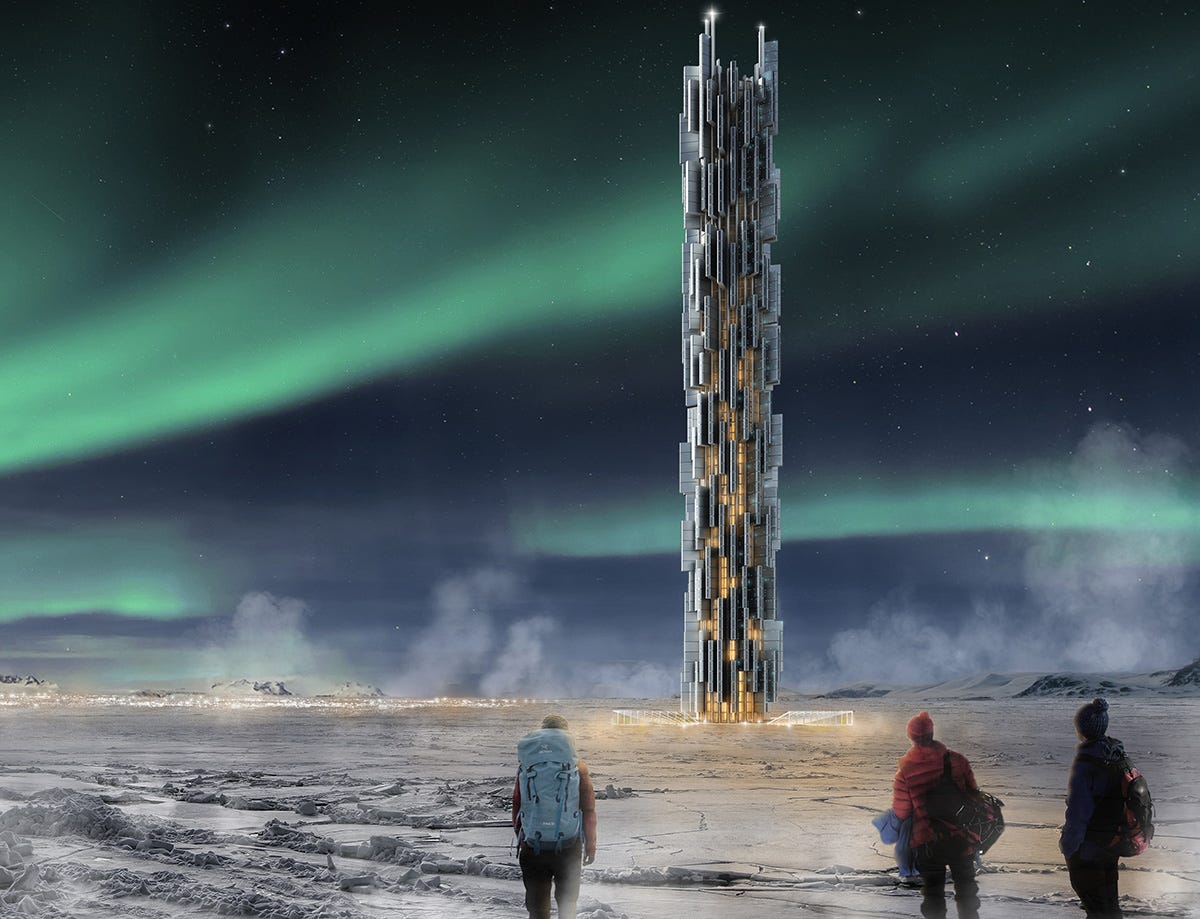
Also prescient is this data centre tower proposed for Iceland.
“Our project is a vision of how could it be a future green data center located in Iceland. A data center is often a large industrial building without a significant architectural connotation, a big anonymous container. The main issue of our project is to investigate a new morphological solution that could represent both the complexity and the importance of the building into which we keep our data. Above all, we conceive the data center’s configuration in order to maximize the use of the available renewable energies and also to allow the re-use in a sustainable way.”
I am not sure that the entries in the 2025 competition are as interesting or as creative as those from 2016. This may or may not be a function of AI doing much of the heavy lifting. In an article for Pratt News, Professor Jason Vigneri-Beane is quoted:
“It’s very easy to get something; it’s very hard to get something interesting, because the more these models learn, the more many of them are tending—because of the way that people are using them—towards realism and commercialism.”
Another professor, Alex Tahinos, says:
“One of the biggest things that needs to be discussed when it comes to AI is the culture of, for lack of a better term, sampling,” Tahinos said. “The music industry went through this same thing, and I think now with the influx of all these images, this tool becomes our way into that idea of sampling, and I think that we’re going to have very similar discussions over the next years based on authorship.”
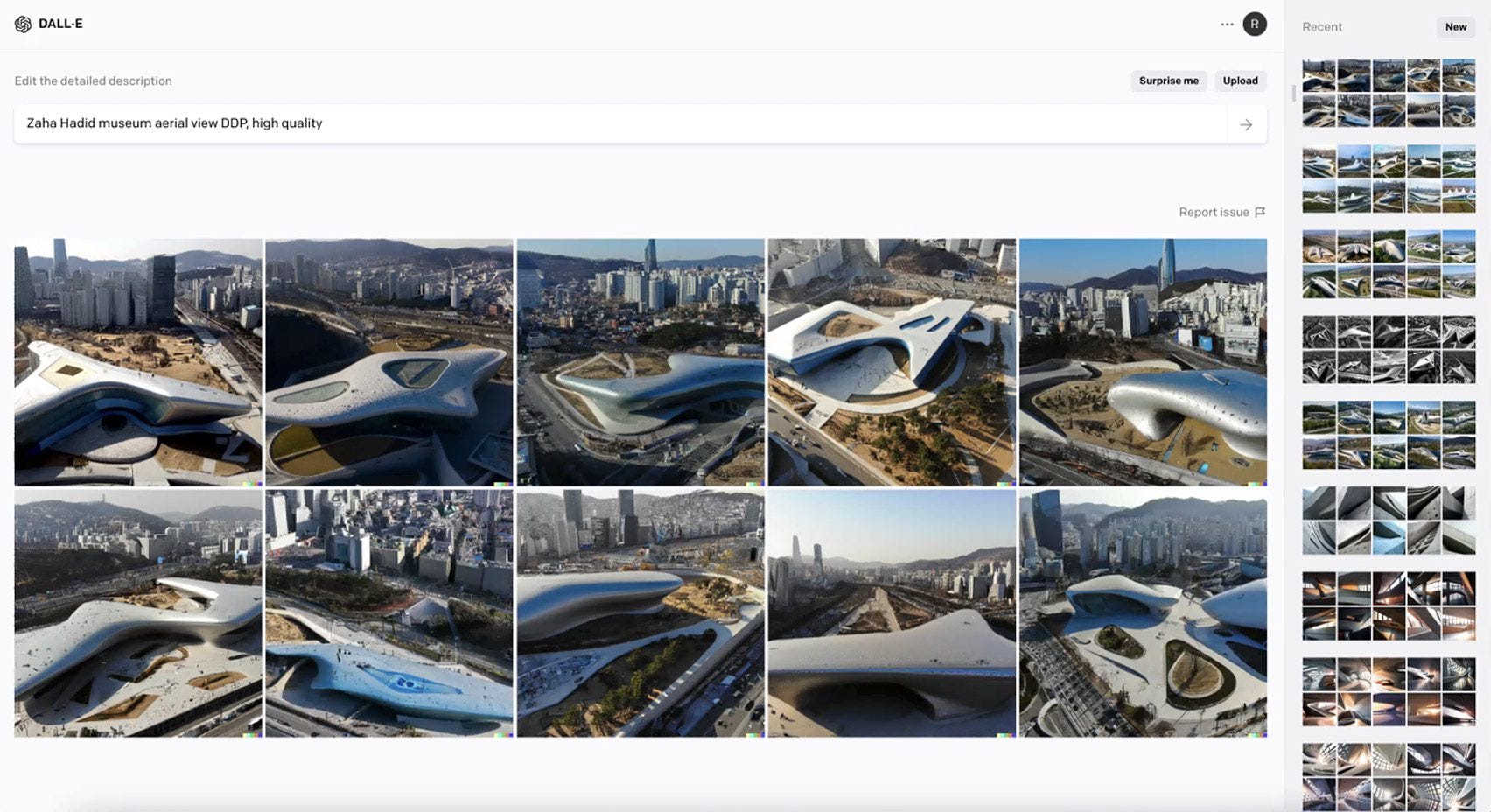
Then there is Patrik Schumacher at Zaha Hadid Architects, who has been using it for a while, noting in Dezeen in 2023 (a lifetime ago in AI), and appears to be cranking out AI Zaha slop.
Zaha Hadid Architects is using AI text-to-image generators like DALL-E 2 and Midjourney to come up with design ideas for projects, studio principal Patrik Schumacher has revealed."Not every single project is using it, but let's say most – I'm encouraging everybody who's working on competitions and early ideation to see what comes up and just to have a larger repertoire."
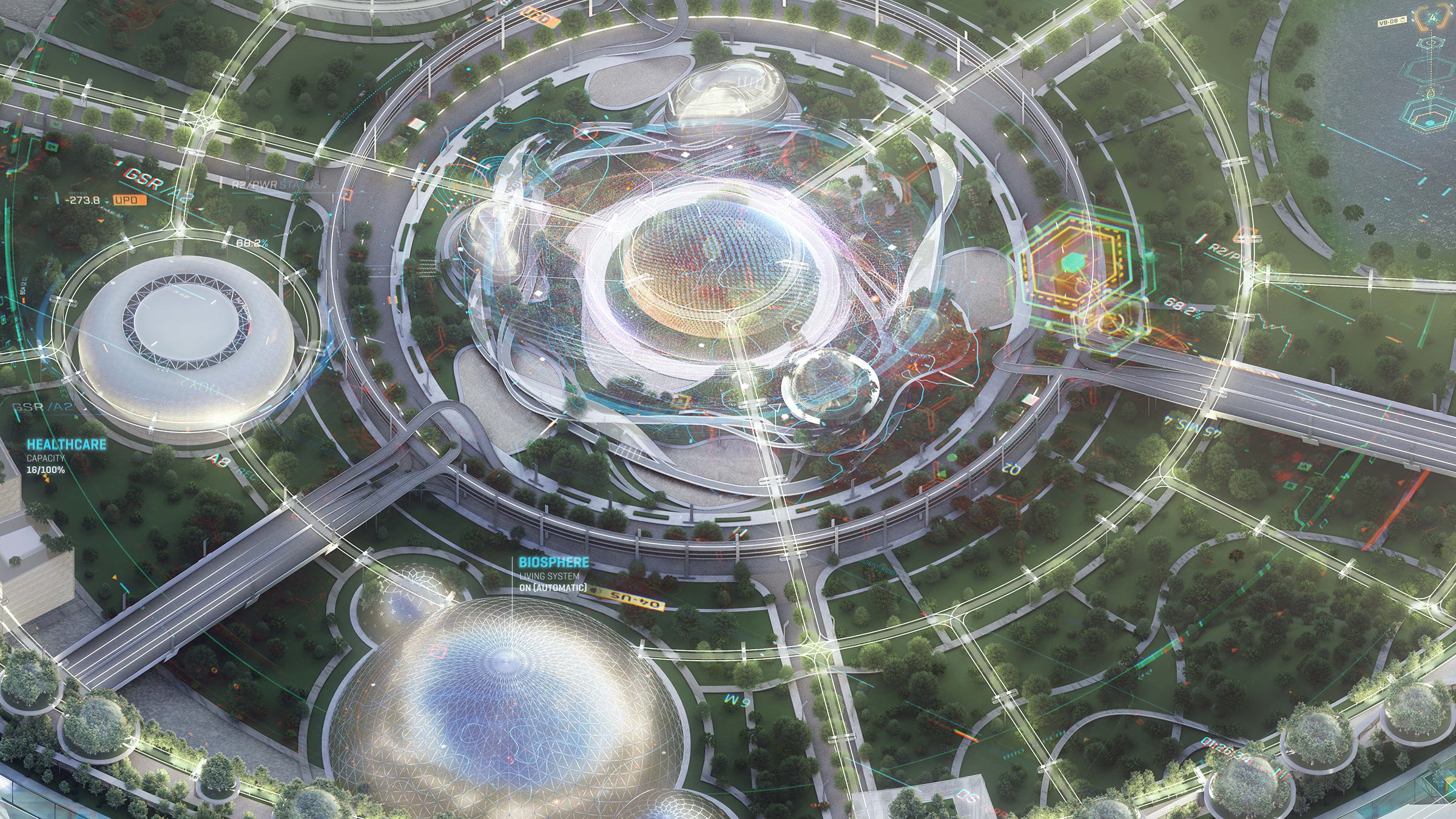
I do not know enough about how text-to-image generators work. Do you just say, “Computer, give me a lunar city!” Do you have to be more explicit?
“Imagine its metallic veins pulsing with new residential arteries as the city welcomes more pioneers and additional modules lock into place. This belt would not simply supply housing; it would also host clinics, schools, laboratories, workshops, libraries, and cultural spaces, along with the everyday services that turn survival into belonging. Transit lines, data links, power distribution, water recovery, and air management would be embedded in the belt’s structure, allowing the city to grow with minimal disruption and maximum continuity.”
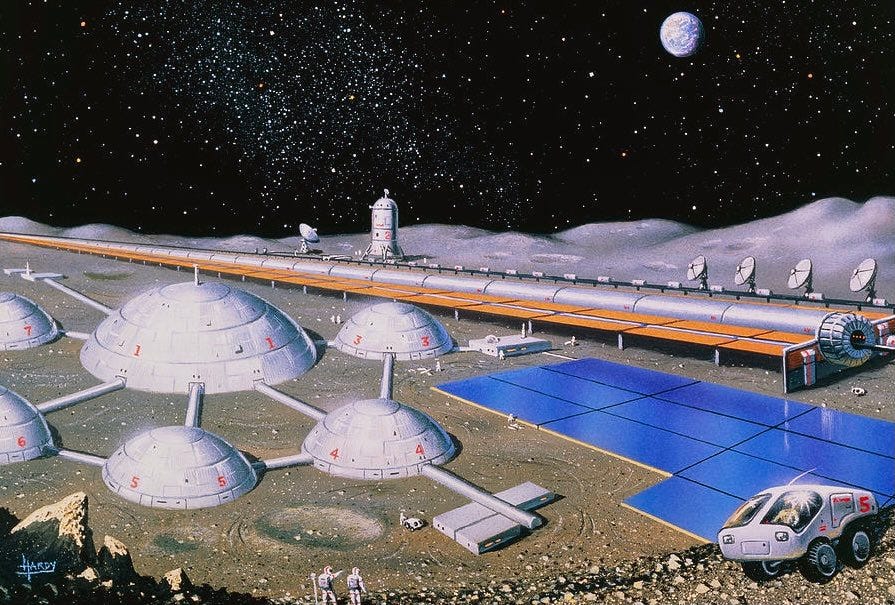
That doesn’t sound much different from the science fiction descriptions of moon bases from when I was a kid, and the rendering doesn’t look that different either from the one David Hardy did decades ago.
I know that I am out of touch with the AI generation. But I also know that I look at the Evolo competitions differently, having no idea if they were anything more than a well-crafted description fed into a text-to-image generator. I used to be so excited by the creativity and skill the kids these days were producing; now I am not sure what they are doing. AI may have ruined the Evolo competition for me.
I'm now retired & whole heartedly agree. In the 90's I first used rough 3D print-outs of computer models of my designs under velum to speed up marker renders. In the early 2000's it was meshing CAD renders in Photoshop, & until a few years ago, renderings with textures all in the CAD render module. These were all based on the designs people like me & colleagues came up with. The CAD images have always left me cold, but clients wanted them. Now? Glossy AI images & the CAD images that support them are today's versions of Oil on Velvet images of Elvis.
How I loathe these sorts of designers. Blue sky designs that don't have to think about costs, the difficulty to construct, the ease of repair, whether it can be cleaned or not, the impact on the neighbourhood and environment, etc.
I worked in an academic library for 31 years and part of my job was moving furniture. I used to absolutely hate it when some bright bean in management bought some piece of beautiful, nice furniture---that was assembled in place and became an absolute horror to move when they inevitably wanted to move it. (I still have sciatica from one abysmal scanner I had to move at zero notice by myself one night that had no proper hand-hold on it or easily-found balance point.)
There is a reason why 'traditions' developed about how to build structures. They were based on experience about how easy it was to build or maintain something. When you totally divorce design from the people who build, maintain, or work inside buildings you end up with monuments to individual designer's boundless ego--and are constant reminders to 'the little people' that no one really cares how needlessly miserable they make other people's lives.