Another reason we need more public washrooms: Aging baby boomers
Over half of older people are consciously dehydrating themselves so that they won't have to pee. This can have serious health consequences

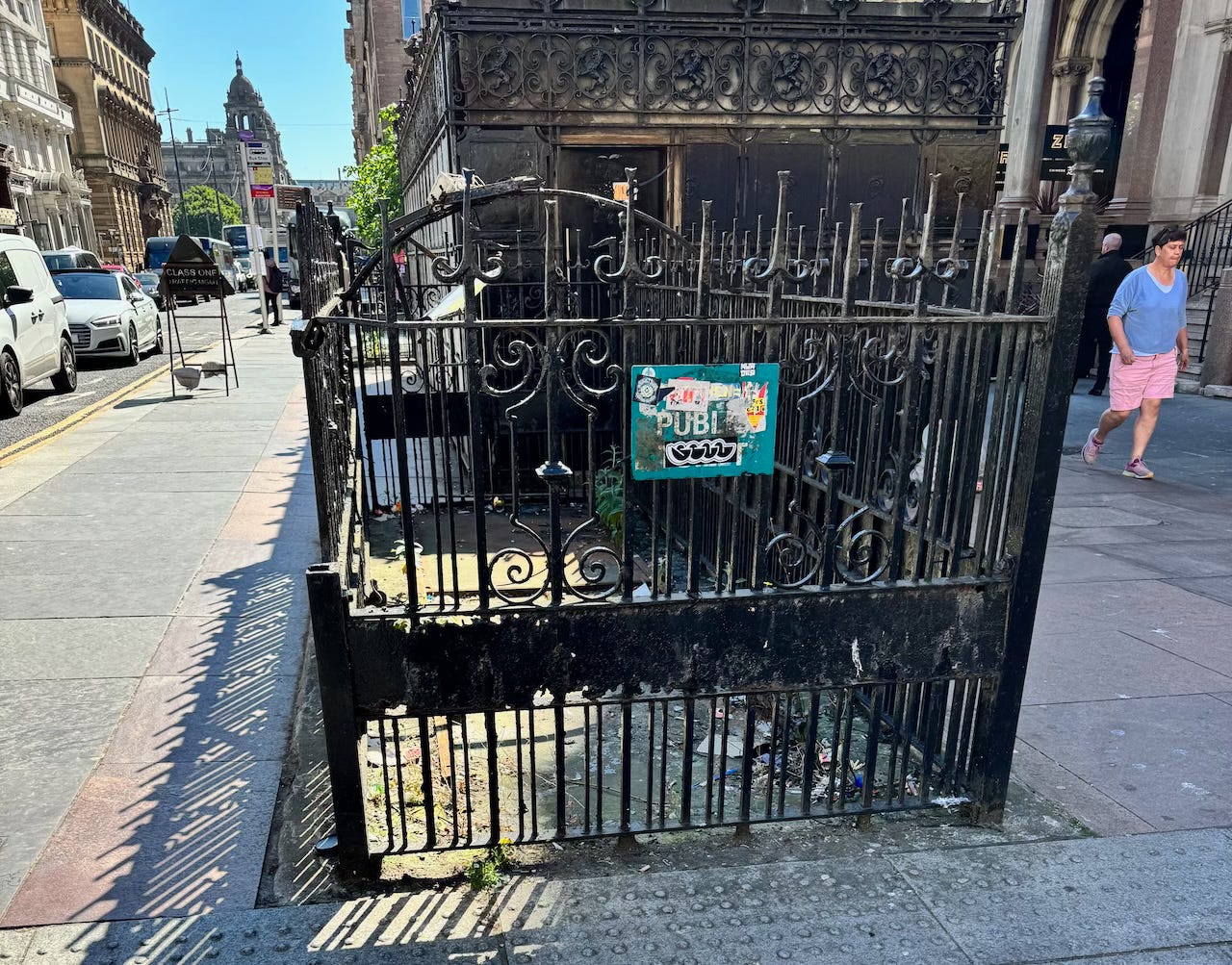
Writing in the UK architecture magazine Building Design, Elisa Sartori of Webb Yates (known to readers for their work with stone) talks toilets, a subject dear to this aging boomer’s heart and bladder. From Public toilets are the invisible infrastructure our cities still badly need:
“Public toilets are one of the simplest tests of whether a place works for people, yet their provision is quietly shrinking… For some people, this is a minor inconvenience. For others, it determines whether they feel able to leave home at all. Older visitors, families with young children and people with medical conditions often plan journeys around the availability of toilets. Remove them, and the city becomes less accessible.”

I have written often about how public toilets are essential infrastructure, concluding my loo leash post with “Public washrooms really are just as important as public roads because, in both cases, people gotta go.”
However, I have not gone into great detail about why aging baby boomers like me have to go so often. This became an issue for me recently, after my doctor advised that I had to drink a lot more water. Which I did, and I quickly found that it dramatically shortened my loo leash, to the point where I am looking for every bush, let alone every toilet.
The lack of toilets is a major reason many older adults don’t drink enough water and become chronically dehydrated. A 2023 study, Hydration Strategies in Older Adults, found that among “16,276 participants—7580 men and 8696 women—from 13 countries, approximately 50% reported inadequate fluid intake, with older adults particularly affected.”
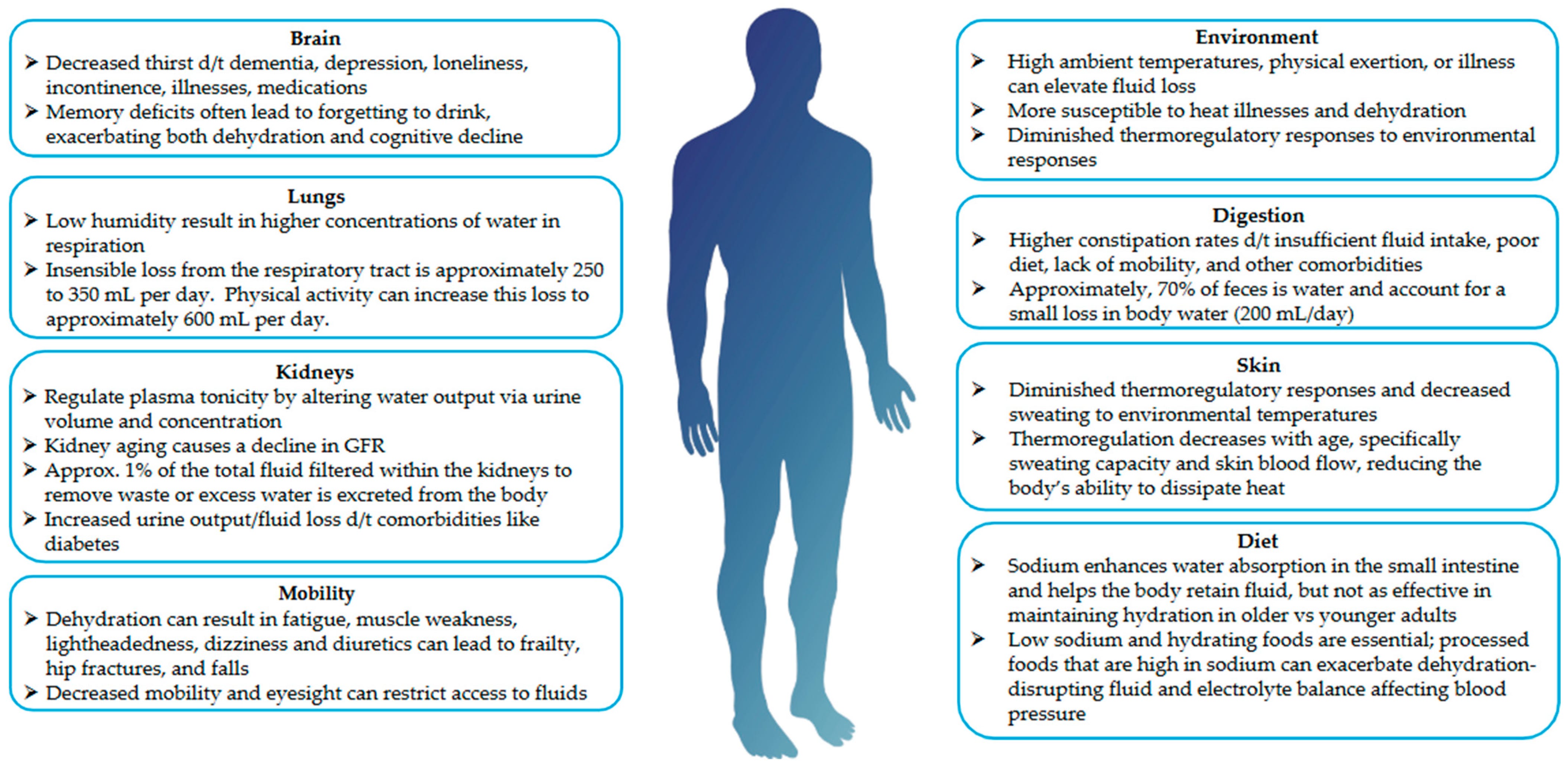
“A 2023 meta-analysis found that nearly one in four older adults were dehydrated.. While there has not been a recent published evaluation of dehydration-related healthcare costs, it has previously been estimated to raise hospitalization costs by 7–8.5%, and associated hospitalization costs were estimated to be over USD 1 billion per year within the United States.”
Another study, Hydration Status in Older Adults: Current Knowledge and Future Challenges, notes:
“Dehydration is associated with adverse health outcomes in older adults, and acts as an independent factor of the hospital length of stay, readmission, intensive care, in-hospital mortality, and poor prognosis. Dehydration is a prevalent health problem in older adults, accounting for substantial economic and social burden.”
There are many reasons that older people get dehydrated. According to UCLA Health, older people just feel less thirsty. Kidney function declines with age. “You’ll urinate more often, leading to greater fluid loss and a higher chance of dehydration.” Women can suffer from stress incontinence; men have enlarged prostate issues.
You have less muscle mass. “As you age, your muscle mass naturally decreases. Because your muscles hold water, less muscle mass means less water storage.” You face mobility challenges. “It’s a lot easier to get up and get a drink when your body lets you. For some older adults, physical limitations such as arthritis, joint pain or general mobility issues can make it challenging to get a glass of water.”
It’s a vicious circle. Muscle mass and mobility challenges can be addressed with exercise, even just walking, but a 2022 Irish study found that the lack of washrooms kept people inside and away from physical activity.
The main reasons older people accessed public space were health motivated. Secondary reasons included the influence of enjoying scenery and wildlife, spending time in nature, getting out of the house and feeling revitalised etc. While these aren’t ‘tagged’ as health reasons, there are obvious linkages and extensive research to outline the benefits of such activity to overall health and social wellbeing improvement.
The largest proportion of respondents (over 25%) indicated that the lack of toilet provision was the main barrier preventing them from accessing open space for outdoor recreation.
Another British study, Taking the P***: Improving public toilets in the UK found that 56% of Britons “reported restricting fluid intake either occasionally or frequently, due to concern that they might not find a toilet.” Reasons for not using a toilet, besides not being able to find one, “included lack of cleanliness, bad smell or lack of toilet paper, cited more frequently by women. There were also concerns about safety, drug use and cost. ( I covered this study for Treehugger a few years ago)
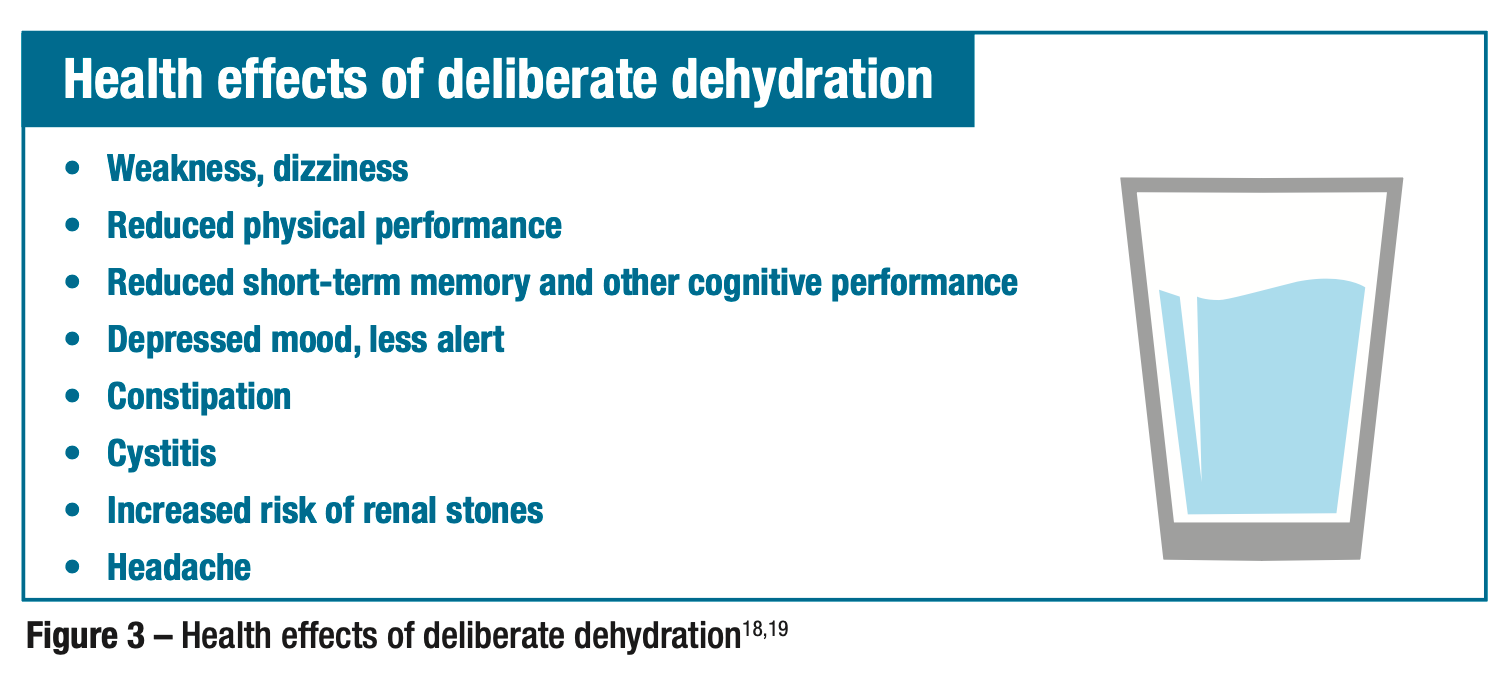
I have no data for North America, but I suspect that it is similar to the British finding that 56% of the population restricts fluid intake.
People of all ages need access to public toilets, but the demographic reality points to a serious problem for aging baby boomers. If they drink the recommended amount of water per day (3.7 litres or 15.5 cups for men, 2.7 litres or 11.5 cups for women, or use this calculator) they are going to need a lot of bathrooms- their bladders can’t hold it as they used to, and the kidneys are excreting more water.
If they don’t drink the recommended amount, they can suffer a decreased quality or length of life and an increased burden on the health care system. So adequate public washrooms are not just a matter of convenience; they are a matter of public health.
I have complained many times about how our resources are allocated and how public washrooms get short-changed.
“Authorities say providing public washrooms can't be done because it would cost "hundreds of millions" but never have a problem spending billions on the building of highways for the convenience of drivers who can drive from home to the mall where there are lots of washrooms. The comfort of people who walk, people who are old, people who are poor or sick — that doesn't matter.”

However, the demographic time bomb may have a way of changing priorities. In 2030, there will be 71 million Americans over the age of 65. A lot of them will be looking for a bathroom. It might be a good idea to start building them now.
Last word to Elisa Sartori:
“If we want to create places that are genuinely inclusive and usable, we need to reconsider what we prioritise. These are not secondary considerations, but the systems that allow places to function at all. Public toilets may be the most honest spaces in architecture. And cities work best when they are treated that way.”
Other countries have dealt with this problem. I was in Japan last December, often needed a loo, and never had a problem finding one.

My greatest irritation are coffee shops and gas stations that do not provide access to toilets. And frankly any bookstore that doesn’t provide a toilet for use while browsing doesn’t need my business.
It's too bad this issue intersects with the problem of homelessness in cities. Homeless people need toilets too. Our usual strategy for dealing with homeless people is for them to be somewhere else, & the fact that that doesn't work doesn't seem to matter. It's very easy to point to public bathrooms & worry about the cost of cleaning & upkeep, & that they attract homeless people & drug use. Then it becomes easy to say that public toilets are too expensive.
I was looking for some info about these high-tech public toilets they installed here in Calgary (they were uninstalled a couple of years ago), & found this article about the ongoing problems with having public toilets:
https://www.sprawlcalgary.com/calgary-public-toilets